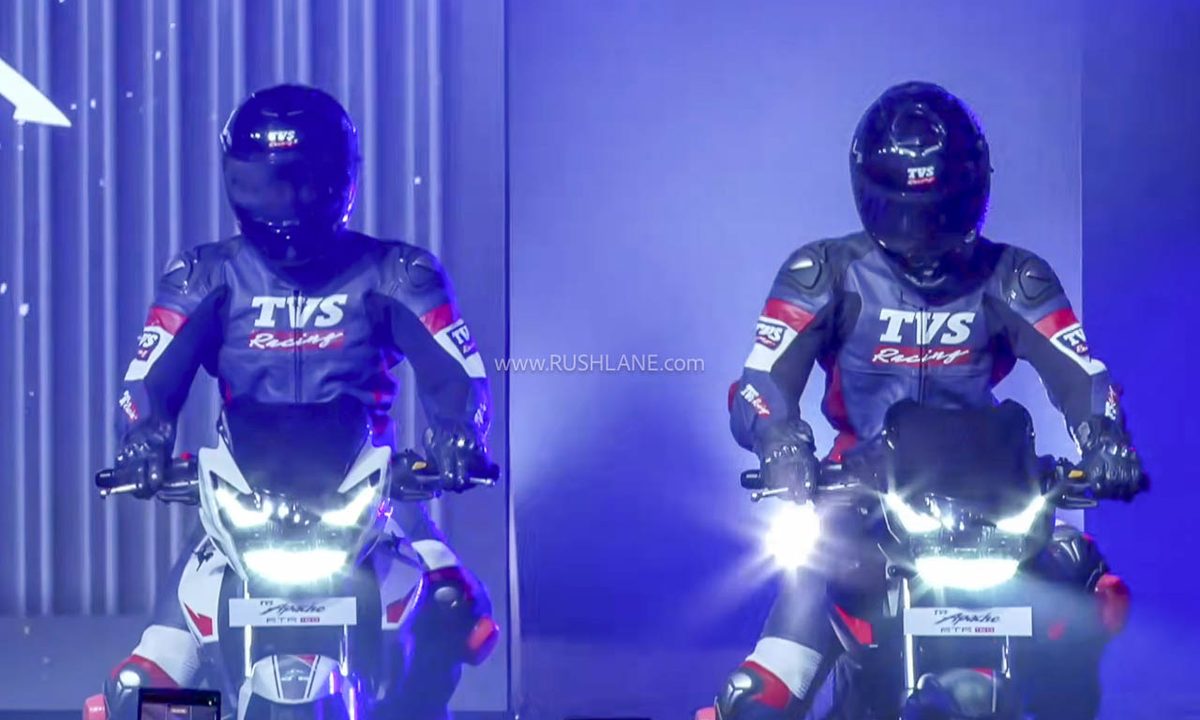
TVS has rolled out refreshed versions of its Apache and Ronin motorcycle lineups, bringing a slew of mechanical upgrades and electronic additions across multiple variants. The updated 2026 TVS Apache family hits showrooms from September 17, with pricing that undercuts expectations—the Apache RTR 160 4V kicks off at ₹1,26,890, while the base RTR 160 Dual Channel ABS with TCS variant sits at ₹1,27,990. These aren’t cosmetic tweaks; the company has added genuine hardware and software improvements that matter to everyday riders.
2026 TVS Apache pricing and variant structure
The Apache 160 range now spans multiple configurations, with the Dual Channel ABS and TCS setup becoming standard on higher trims. Entry-level pricing at ₹1,26,890 for the 160 4V makes it competitive against the Hero Splendor iSmart and Bajaj Pulsar 150, though the TVS brings more aggressive styling and a sportier character. Moving up the ladder, you get access to connected features—think Bluetooth connectivity and smartphone integration—that were once reserved for premium commuters.
The Apache 200 4V also receives attention this cycle, though TVS hasn’t disclosed a separate starting price. What matters here is that both the 160 and 200 now share the same electronic architecture, meaning even the smaller-displacement model gets the brand’s latest tech stack. The Ronin cruiser family rounds out the update with new colour options and variant tweaks, though it operates in a different market segment altogether.
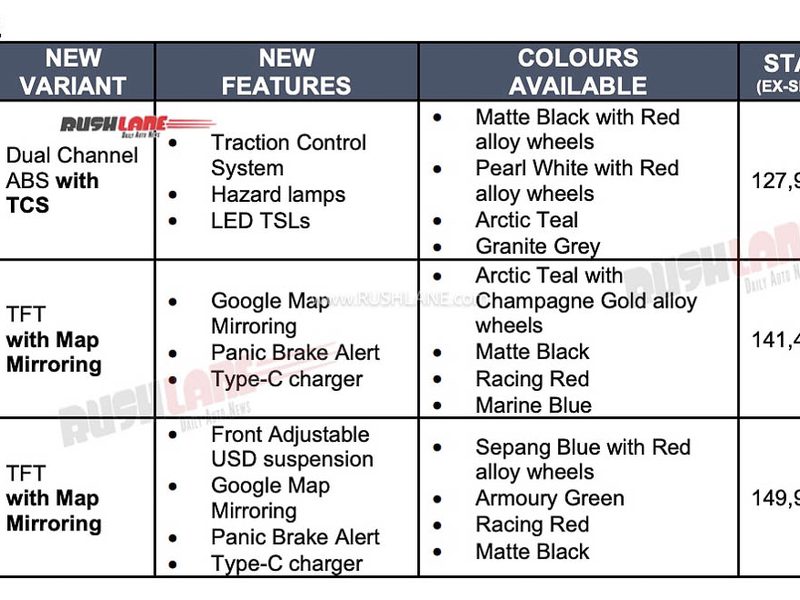
What’s new on the 2026 TVS Apache
The standout addition is dual-channel ABS paired with traction control (TCS). For riders who’ve grown accustomed to single-channel systems, this is a meaningful step forward—the dual setup works independently on front and rear wheels, preventing lock-up during hard braking while the TCS monitors rear-wheel slip during acceleration. On Indian roads where sudden stops and loose surfaces are common, this pairing genuinely reduces the margin for error.
Connected features represent the second pillar of this update. The Apache now integrates smartphone connectivity, allowing riders to access basic telemetry, navigation prompts, and possibly call/message alerts directly on the bike’s instrument cluster. It’s not revolutionary—Hero and Bajaj have been down this road—but it brings the Apache in line with what buyers expect at this price point. TVS has also upgraded the chassis tuning; suspension geometry and damping rates have been revisited for better stability without sacrificing the bike’s nimble character on city roads.
Engine and performance unchanged
The 160 cc and 200 cc four-valve engines carry over unchanged. The smaller unit produces around 15.2 bhp at 8,000 rpm, while the 200 delivers roughly 20.7 bhp at the same peak. Torque figures remain stable too—the 160 makes 14.8 Nm, the 200 does 17.3 Nm. Purists might have hoped for a bump in power, but TVS has clearly chosen to invest in electronics and handling rather than chase outright horsepower. That’s a pragmatic call for a bike aimed at office-goers and weekend riders, not performance enthusiasts.
How the 2026 TVS Apache stacks up
Against the Hero Splendor iSmart, the Apache 160 4V is pricier by roughly ₹5,000–₹7,000 but offers sportier ergonomics and a more engaging ride. The Bajaj Pulsar 150 sits in a similar ballpark and brings more power (14 bhp), yet the TVS counters with better braking tech and a sharper handling package. If you’re choosing between these three for daily commuting, the Apache’s dual-channel ABS becomes a real differentiator—it’s the only one in this price bracket offering that level of safety hardware.
The Apache 200 4V, meanwhile, has to justify its existence against the Pulsar 180 and the Hero Xtreme 160R. The TVS brings connected features and the ABS/TCS combo, but the Bajaj Pulsar 180 offers more grunt and a sportier image. Here, it comes down to whether you value technology and refinement (Apache) or raw performance (Pulsar).
What buyers should know
Waiting periods for TVS motorcycles have historically been short—expect delivery within 2–4 weeks depending on your city and colour choice. On-road prices will vary by state; in metro areas like Delhi and Mumbai, add another ₹8,000–₹12,000 for registration and insurance. The Apache’s resale value has remained strong in the used market, particularly for the 160 and 200 variants, so depreciation shouldn’t be a major concern.
Fuel efficiency is another point in the Apache’s favour. Real-world mileage hovers around 55–60 km/litre for the 160, with the 200 returning roughly 50–55 km/litre under mixed riding. That’s solid for bikes in this power bracket. Service costs are reasonable too—TVS’s parts and labour charges are competitive, and the network of dealerships across Tier-2 towns makes maintenance hassle-free.
The bottom line
The 2026 TVS Apache refresh is a measured, intelligent update. TVS hasn’t chased headline-grabbing power figures or radical design changes; instead, it’s focused on what daily riders actually need—better brakes, traction control, connectivity, and chassis refinement. At ₹1,26,890 for the RTR 160 4V, the bike undercuts rivals while matching or beating them on features. For someone doing 40 km a day in city traffic, or a college student hunting a reliable, tech-forward commuter, the Apache is now a harder case to pass up. The real test, though, will come on the road—whether that dual-channel ABS and TCS actually make a tangible difference when things go wrong. We’ll reserve full judgment until we’ve tested the updated models ourselves.
Frequently asked questions
What’s the starting price of the 2026 TVS Apache 160 4V?
The Apache RTR 160 4V starts at ₹1,26,890 ex-showroom. The Dual Channel ABS with TCS variant is priced at ₹1,27,990. On-road prices will be higher depending on your state’s registration and insurance costs.
Does the 2026 TVS Apache come with ABS as standard?
Yes, dual-channel ABS with traction control (TCS) is now available on the updated variants. This is a significant safety upgrade that independently manages braking on front and rear wheels, plus monitors rear-wheel slip during acceleration.
What connected features does the 2026 Apache offer?
The updated Apache includes Bluetooth connectivity and smartphone integration, allowing riders to access navigation, telemetry, and call/message alerts on the instrument cluster. The exact feature set may vary by trim level.