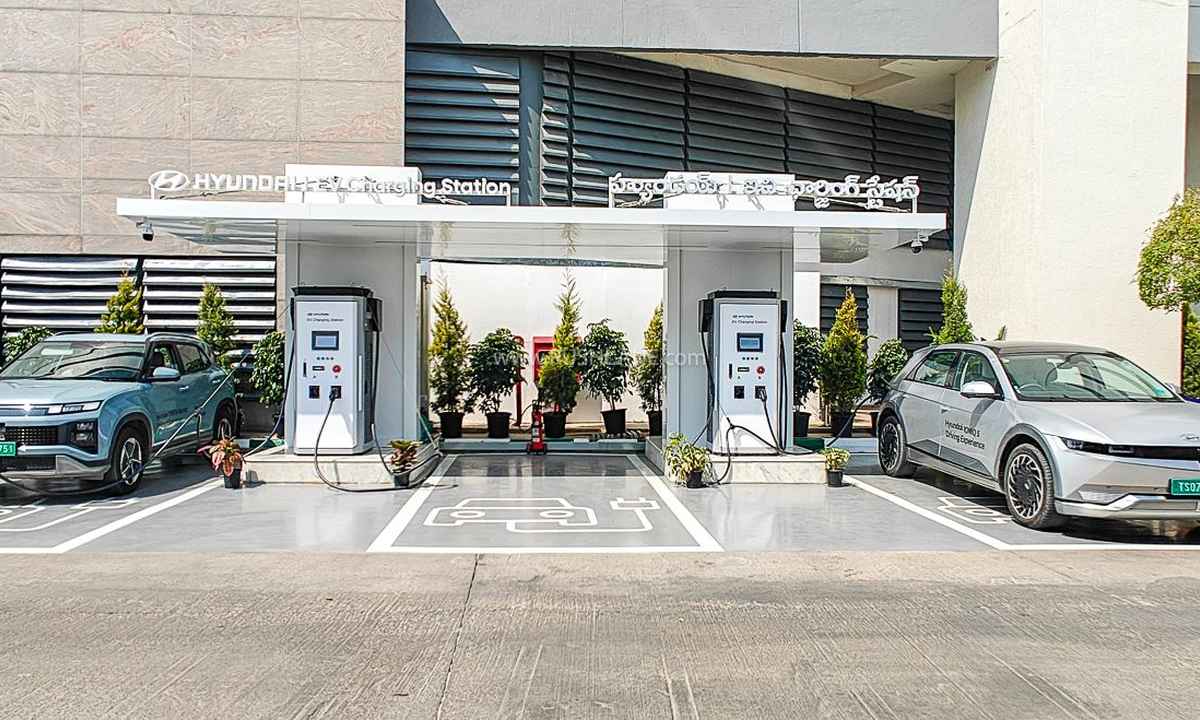
Hyundai has quietly made life easier for EV owners in India. The automaker’s proprietary app now bundles access to over 30,000 charging stations across the country—a single-platform convenience that most rivals haven’t matched yet. For anyone who owns a Hyundai Creta EV, Kona Electric, or is eyeing the upcoming Ioniq 5, this is genuinely useful infrastructure news, not just marketing fluff.
The Charging Network Grows
Through the Hyundai myHyundai app EV charging integration, owners can now locate and access public charging points without juggling multiple apps or membership cards. The 30,000+ network isn’t exclusively Hyundai’s own hardware—it’s a federated ecosystem pulling together public chargers from across India’s fragmented charging landscape. That’s the practical angle: instead of hunting for a ChargeZone or Statiq or EaseMyEV station separately, one app shows you everything.
The real ambition, though, sits further out. Hyundai plans to expand its proprietary DC fast-charging network from 183 stations today to 600 stations by 2030. That’s a 3.3x increase over six years. For context, that’s roughly one proprietary Hyundai charger per major metro and Tier-1 city by decade’s end, which is serious infrastructure commitment. Most Indian carmakers talk about charging; Hyundai is actually building it.
Why This Matters Now
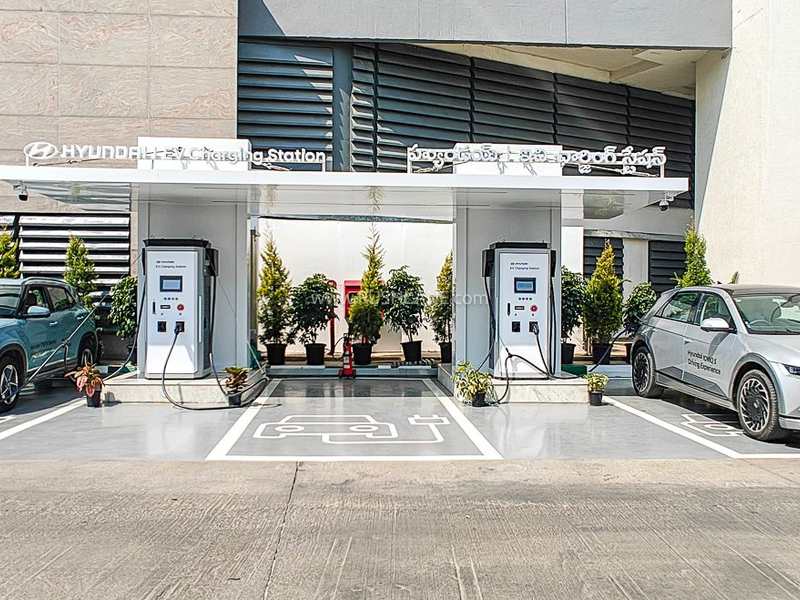
India’s EV charging landscape is fragmented. A Tata EV owner uses Tata Charge. A BYD owner taps BYD’s network. A Mahindra buyer has a different app. Hyundai’s move to aggregate 30,000+ points through myHyundai app EV charging solves a real pain point: range anxiety isn’t just about battery size anymore—it’s about *knowing* where you can charge when you’re 200 km from home and low on juice.
The timing also coincides with Hyundai’s EV push. The Creta EV is already here. The Ioniq 5 is coming. The Ioniq 6 sedan is on the horizon. As Hyundai’s EV portfolio thickens, having a unified charging app becomes a competitive moat. It’s harder to abandon the brand if your charging life is already wired into its ecosystem.
The 600-Station Plan: Realistic or Optimistic?
Hyundai’s commitment to 600 proprietary DC fast chargers by 2030 deserves scrutiny. That’s roughly 100 chargers per year. Today it has 183. The jump is steep but not impossible—Tata Power and Reliance have both demonstrated India can scale charging infrastructure when capital is committed. And Hyundai’s parent company Hyundai Motor Group has proven EV charging competence in South Korea and Europe.
But here’s the catch: India’s real estate, land acquisition, and grid capacity constraints are brutal. Getting 600 prime locations (highways, city centers, malls) approved and connected is easier said than done. We’ll reserve final judgment until Hyundai hits 300 stations; that’s when you’ll know if the 600 target is genuine or aspirational.
How It Stacks Against Rivals
Tata Motors has Tata Charge, which is proprietary and growing. MG Motor leans on third-party networks. BYD has its own ecosystem in China but is still building in India. Mahindra’s charging story is fragmented. Hyundai’s move to unify 30,000+ points through a single app puts it ahead of most rivals in terms of *accessibility*, even if it’s not ahead in raw proprietary infrastructure yet.
For an EV buyer in Delhi or Bengaluru, the myHyundai app EV charging integration means one less decision headache. For someone in Pune or Hyderabad, it’s the difference between feeling confident about a 300 km road trip or staying nervous.
What Owners Get, What’s Missing
The app integration covers locating chargers, checking availability, and booking slots. That’s table stakes. What’s not clear: pricing transparency, payment integration (do you pay through the app or at the charger?), and real-time reliability data. Nothing kills an EV charging app faster than arriving at a station only to find it’s down or occupied.
Hyundai hasn’t detailed whether the 30,000 points come with any preferential pricing for myHyundai app users, or if it’s just convenience of discovery. That’s the next question worth asking.
The Bottom Line
Hyundai’s move to bundle 30,000+ charging points through myHyundai app EV charging is smart infrastructure thinking, not a game-changer on its own. It solves a real problem (app fragmentation) and signals long-term EV commitment (600 proprietary chargers by 2030). For someone cross-shopping the Creta EV against the Tata Nexon EV or MG ZS EV, this infrastructure play tilts the scales slightly in Hyundai’s favor—not because the charging is revolutionary, but because it’s *integrated*. In the next five years, as EV ownership grows and charging becomes as routine as fueling a petrol car, this ecosystem advantage could matter more than it does today.
Frequently asked questions
What charging stations are included in the Hyundai myHyundai app EV charging network?
The app integrates over 30,000 public charging points across India from multiple networks. It also includes Hyundai’s proprietary DC fast chargers (currently 183 stations, expanding to 600 by 2030). The app aggregates these into one platform for easier discovery and booking.
Can I use the myHyundai app to charge any EV, or just Hyundai vehicles?
Details on this haven’t been explicitly confirmed, but typically such integrations are available to all EV owners, not just Hyundai owners. We recommend checking with Hyundai directly or downloading the app to verify eligibility.
When will Hyundai’s 600 DC fast chargers be ready?
Hyundai has targeted 600 proprietary DC fast-charging stations by 2030. Currently, the brand operates 183 stations. The rollout will happen gradually over the next six years, prioritising metro cities and Tier-1 locations first.