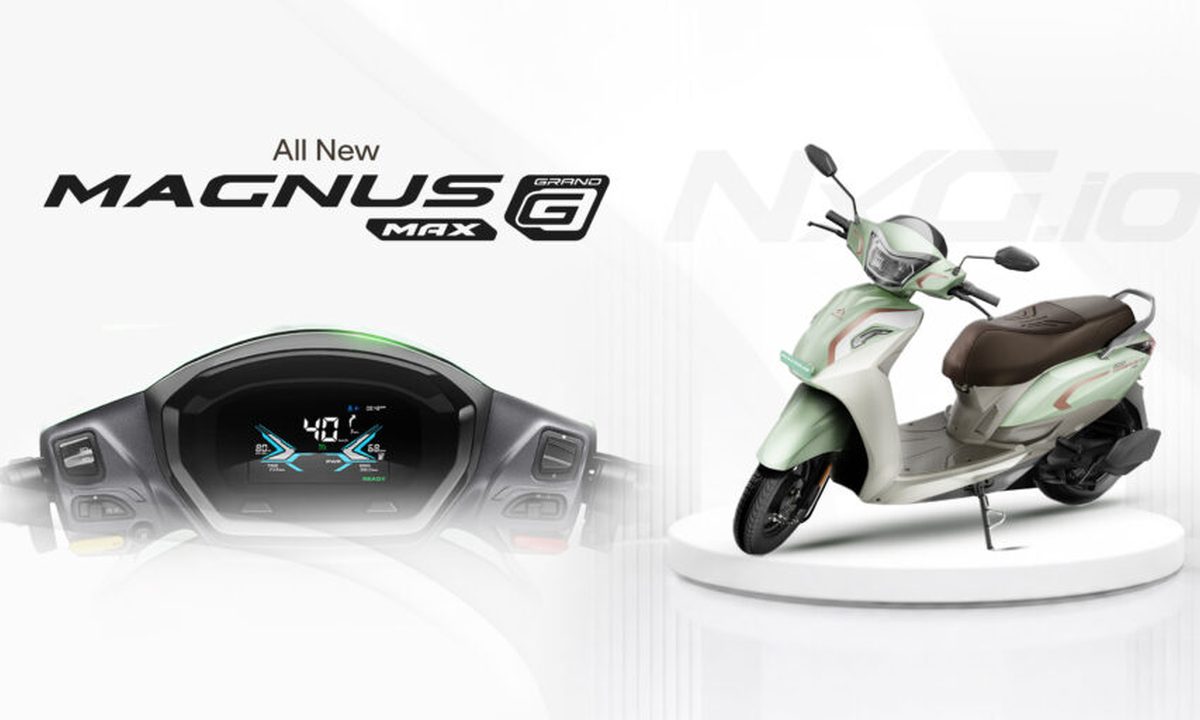
Ampere has quietly packed over 30 new features into the Magnus G Max, its entry-level electric scooter, keeping the on-road price at ₹1.10 lakh. What’s remarkable isn’t just the sheer count—it’s what these features do. A scooter that can hold itself on an incline and talk you through city streets using built-in navigation? That used to live in the realm of ₹2+ lakh machines. Not anymore.
What’s New in the Ampere Magnus G Max
The headline feature here is hill-hold assist. Stop the Ampere Magnus G Max on a slope, and the motor locks the wheels, preventing rollback. For anyone who’s felt that stomach-drop moment on a Bengaluru flyover or Mumbai’s Western Express Highway, this is genuinely useful. No more feathering the brakes or praying at traffic lights on inclines.
Navigation is the second big addition. The scooter now integrates turn-by-turn guidance, meaning you’re not juggling your phone mount and squinting at Google Maps while riding. The display handles it. For delivery riders and daily commuters doing unfamiliar routes, this cuts cognitive load and keeps eyes on the road.
Beyond those two, Ampere has layered in refinements across comfort, safety, and convenience. We’re talking improved braking feedback, refined throttle mapping, better seat ergonomics for longer rides, and enhanced dashboard readability. There’s also talk of improved water resistance and better cable management—the kind of stuff that doesn’t sound flashy but saves you ₹500-₹1000 in service costs over three years.
Ampere Magnus G Max: Pricing and Positioning
At ₹1.10 lakh ex-showroom, the Ampere Magnus G Max sits comfortably below the ₹1.5-lakh zone where you’d find rivals like the Hero Electric Nyx or the Bajaj Chetak. On-road, you’re looking at roughly ₹1.30–₹1.40 lakh depending on your state’s registration and insurance costs.
That price point is critical. This is the scooter for someone who needs daily transport from a Tier-2 town to an office 20–25 km away, or a delivery executive doing 60–80 km a day. Not aspirational. Not trendy. Practical.
Range, Battery, and Real-World Usability
The Ampere Magnus G Max comes with a removable lithium-ion battery. Ampere claims 75–80 km per charge under ideal conditions; real-world range sits closer to 55–65 km depending on riding style and terrain. Charging takes 4–5 hours on a standard 5-amp socket, which is fine if you’re charging overnight but annoying if you need a midday top-up.
The motor is a 1.2 kW unit, which translates to peppy acceleration up to about 40 km/h, then a gentler climb to a 45 km/h top speed. It’s not thrilling, but it’s adequate for city traffic. More importantly, it means the battery lasts longer and the motor doesn’t overheat in stop-start city riding.
How It Stacks Against Rivals
The Ampere Magnus G Max’s closest competitor is the Hero Electric Nyx, which sits at ₹1.45 lakh and offers a slightly larger frame and 65 km range. But the Nyx doesn’t have hill-hold assist or built-in navigation. You’re paying ₹35,000 more for a bigger body, not smarter features.
The Bajaj Chetak, at ₹1.68 lakh, is in a different league—it’s positioned as a lifestyle scooter with retro styling and a bigger battery (65 km range). If you care about brand heritage and aesthetics, Chetak wins. If you care about features-per-rupee and practicality, the Ampere Magnus G Max is the sharper choice.
Against unbranded or Chinese-import scooters that flood the online space at ₹70,000–₹90,000, the Magnus G Max’s warranty, service network, and feature set justify the premium. You’re not just buying a scooter; you’re buying peace of mind.
The Catch: What You’re Not Getting
Let’s be honest. The Ampere Magnus G Max is not a game-changer. The range is modest. The top speed won’t excite anyone. The design is functional, not beautiful. And Ampere’s service network, while growing, is still patchy outside metro cities and major towns. If your nearest service centre is 50 km away, these 30 new features mean nothing when something breaks.
Battery degradation is also a real concern. After three years, expect 15–20% loss in range. Replacement batteries cost ₹40,000–₹50,000, which is a significant hit on a ₹1.10-lakh machine.
Who Should Buy This?
The Ampere Magnus G Max makes sense if you’re a daily commuter in a city or town with decent roads, predictable routes, and access to an Ampere service centre. It’s brilliant for last-mile connectivity—home to the station, office parking to meeting room. It’s less suitable if you’re doing long, variable-distance rides or live somewhere with poor road conditions and zero service infrastructure.
The hill-hold assist and navigation features are genuinely useful, not gimmicks. They solve real problems that scooter riders face. That’s what separates the Ampere Magnus G Max from the sea of spec-sheet machines flooding the market.
The Bottom Line
Ampere is doing something right. By stacking useful, real-world features into an affordable package, it’s making electric two-wheelers less about compromise and more about smart choice. The Ampere Magnus G Max won’t turn heads at a traffic light, but it’ll save you money, hassle, and anxiety. For a first-time electric scooter buyer on a budget, that’s exactly what matters. The question isn’t whether the Magnus G Max is good—it’s whether Ampere’s after-sales support can keep pace with its ambitions.
Frequently asked questions
What is the on-road price of the Ampere Magnus G Max?
The ex-showroom price is ₹1.10 lakh. On-road cost varies by state but typically ranges from ₹1.30–₹1.40 lakh after registration, insurance, and taxes.
What is the real-world range of the Ampere Magnus G Max?
Ampere claims 75–80 km per charge, but real-world range is closer to 55–65 km depending on riding style, terrain, and temperature. Charging takes 4–5 hours on a standard socket.
Does the Ampere Magnus G Max have hill-hold assist?
Yes. The scooter locks the wheels when stopped on an incline, preventing rollback. It also includes turn-by-turn navigation via the dashboard display.