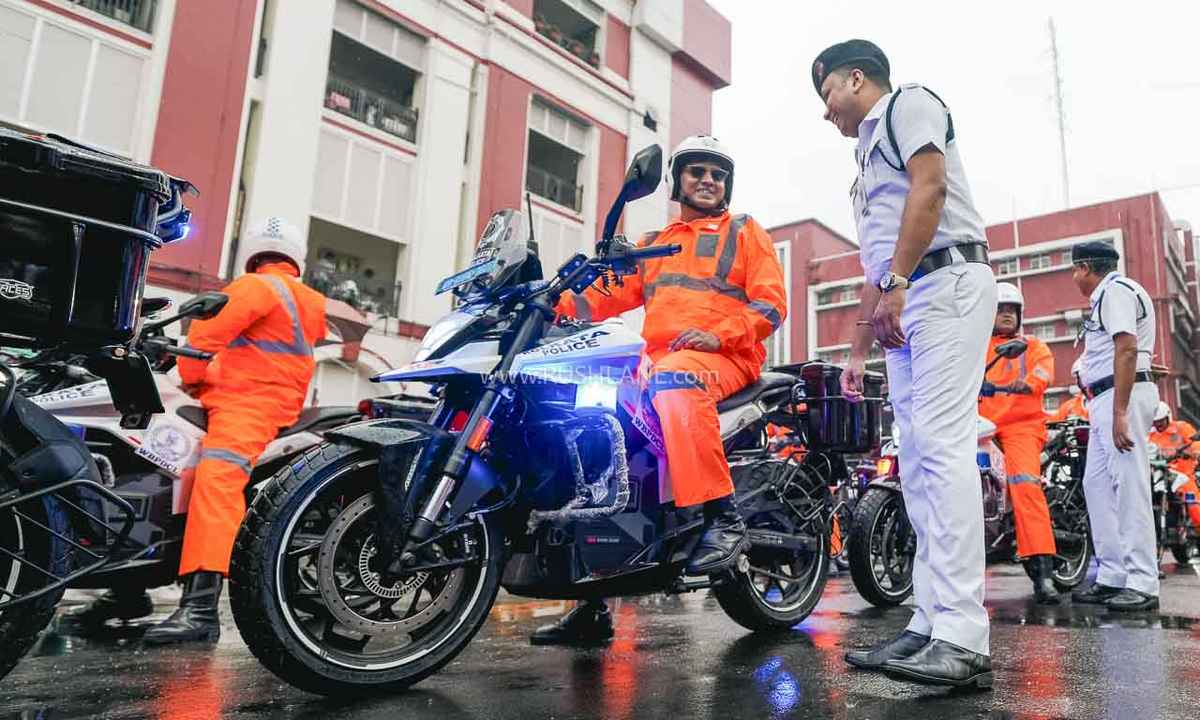
Kolkata Police has just taken delivery of 183 Ultraviolette electric bikes—specifically the X-47 Skyforce model—marking one of India’s largest fleet electrification moves for law enforcement. This isn’t just about swapping petrol for electrons; it’s a statement that Indian police forces are serious about going green without compromising on duty performance.
The Ultraviolette electric bikes in Kolkata Police service aren’t your standard showroom variants. These units come as a dedicated police edition, fitted with integrated patrol equipment designed for the specific demands of traffic control, quick-response duties, and crowd management across the city’s congested streets.
Performance specs that matter for patrol work
The X-47 Skyforce claims an IDC (Indian Driving Cycle) range of 211 km per charge—a figure that translates to real-world usability for a full shift of urban patrolling without range anxiety mid-duty. For a motorcycle designed to weave through Kolkata’s notorious traffic, that’s plenty. The top speed of 145 km/h is more than adequate for pursuit and response scenarios where you need to keep pace with city traffic, not necessarily exceed it.
What matters most for police work, though, isn’t raw speed. It’s torque delivery, acceleration from standstill, and the ability to handle quick manoeuvres in tight spaces. Electric motors excel here—instant torque from zero rpm means a police rider can respond to a situation without the lag of a combustion engine. The Ultraviolette electric bikes deployed with Kolkata Police should handle urban patrol duties with relative ease, especially given the motorcycle’s lightweight construction compared to larger displacement bikes.
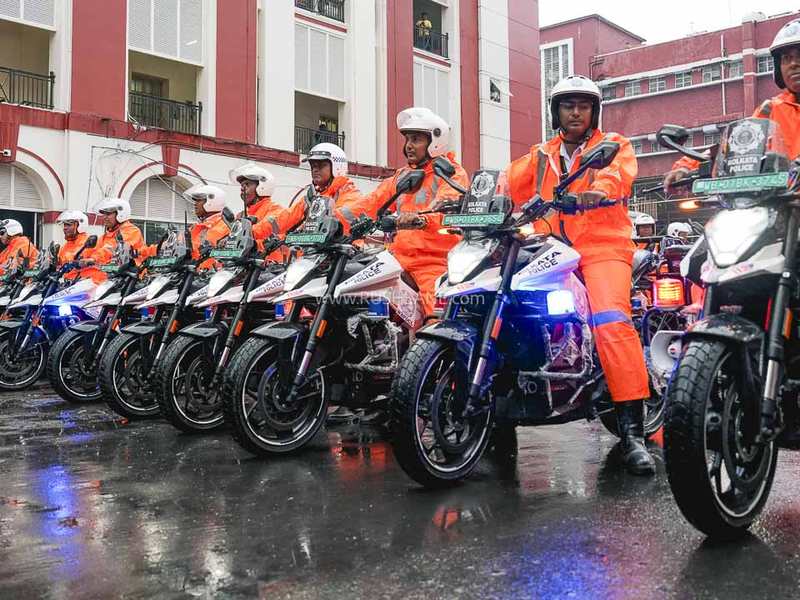
Why Ultraviolette electric bikes for Kolkata Police?
The choice of Ultraviolette speaks to a broader trend in Indian policing: operational efficiency meets environmental responsibility. A patrol motorcycle does far more than just transport—it carries communication gear, lights, sirens, and sometimes weapon mounts. The X-47 Skyforce’s integrated patrol equipment means these additions don’t require aftermarket hacking; they’re purpose-built into the bike’s architecture.
Running costs are another factor. Electricity is cheaper than petrol per kilometre, and electric motors have fewer moving parts, which means lower maintenance overhead for the police department. No oil changes, no spark plugs, no transmission fluid—just battery management and brake servicing. Over the operational life of 183 bikes, that adds up to significant savings.
There’s also the noise factor. An electric motorcycle is nearly silent, which is actually useful for patrol work in residential areas and during early morning or late-night operations. Less noise pollution, less disturbance to citizens, yet the bike remains visible and authoritative on the road.
Ultraviolette electric bikes in context: India’s EV push
This Kolkata Police deployment sits within a larger narrative of India’s push toward electric two-wheelers. While the private market has seen startups like Ultraviolette, Ather, and Hero Electric compete for consumer attention, the real validation comes when government agencies adopt these vehicles at scale. A 183-unit order from a major metropolitan police force isn’t just a purchase—it’s a vote of confidence in the technology’s maturity.
Police forces are conservative buyers. They don’t experiment with unproven platforms. If Kolkata Police is comfortable putting the X-47 Skyforce on daily patrol duty across the city, it signals that electric two-wheelers have crossed a credibility threshold. Other departments—traffic police in other metros, highway patrol units, even rural constabularies—will be watching this rollout closely.
The catch: charging infrastructure
Here’s where the rubber meets the road, or rather, where the charger meets the outlet. Deploying 183 electric bikes means Kolkata Police needs dedicated charging infrastructure at police stations and patrol depots across the city. If that infrastructure is inadequate, even the best motorcycle becomes a paperweight. The sources don’t detail the charging setup, which is a gap—this is something to keep an eye on as the deployment matures.
Weather is another consideration. Kolkata’s humid climate and monsoons will test the X-47 Skyforce’s waterproofing and battery durability. Electric two-wheelers can handle rain, but prolonged exposure and charging in wet conditions need careful management. The police department will need to train riders on proper bike care in a tropical monsoon environment.
What this means for the two-wheeler market
For Ultraviolette, this Kolkata Police order is a massive credibility boost. It’s the kind of institutional validation that attracts follow-on orders from other police departments, municipal corporations, and logistics companies. The X-47 Skyforce goes from being a startup product to a proven platform used by India’s law enforcement.
For rival manufacturers, it’s a wake-up call. If Ultraviolette is winning large government tenders, competitors need to ensure their own electric motorcycles meet similar performance and reliability standards. The two-wheeler market is about to get a lot more competitive at the institutional level.
For everyday buyers, this deployment doesn’t immediately change anything—you can’t buy a police-spec Ultraviolette electric bike. But it does prove that electric two-wheelers can handle demanding, 24/7 duty cycles in Indian conditions. That builds confidence in the technology for the mass market.
The bottom line
Kolkata Police’s adoption of 183 Ultraviolette electric bikes is a significant milestone for India’s EV transition, even if it doesn’t make headlines like a new car launch. It’s proof that electric two-wheelers aren’t just a trendy option for young urban commuters—they’re now trusted enough for critical public safety duties. Whether this becomes a template for other police forces across India, or remains a one-off Kolkata story, depends on how well these bikes perform over the next 18 months. We’ll reserve final judgment until real-world patrol data emerges, but on paper, this is a smart move.
Frequently asked questions
What is the range of the Ultraviolette electric bikes deployed with Kolkata Police?
The X-47 Skyforce claims an IDC (Indian Driving Cycle) range of 211 km per full charge, which is sufficient for a full patrol shift in urban conditions without requiring mid-duty recharging.
Why did Kolkata Police choose Ultraviolette electric bikes over traditional petrol motorcycles?
Electric bikes offer lower running costs, reduced maintenance, quieter operation for residential patrols, and environmental benefits. The X-47 Skyforce also features integrated patrol equipment designed specifically for police duties.
What is the top speed of the Ultraviolette X-47 Skyforce used by Kolkata Police?
The motorcycle has a top speed of 145 km/h, which is adequate for urban patrol, pursuit, and response duties without excessive highway performance demands.