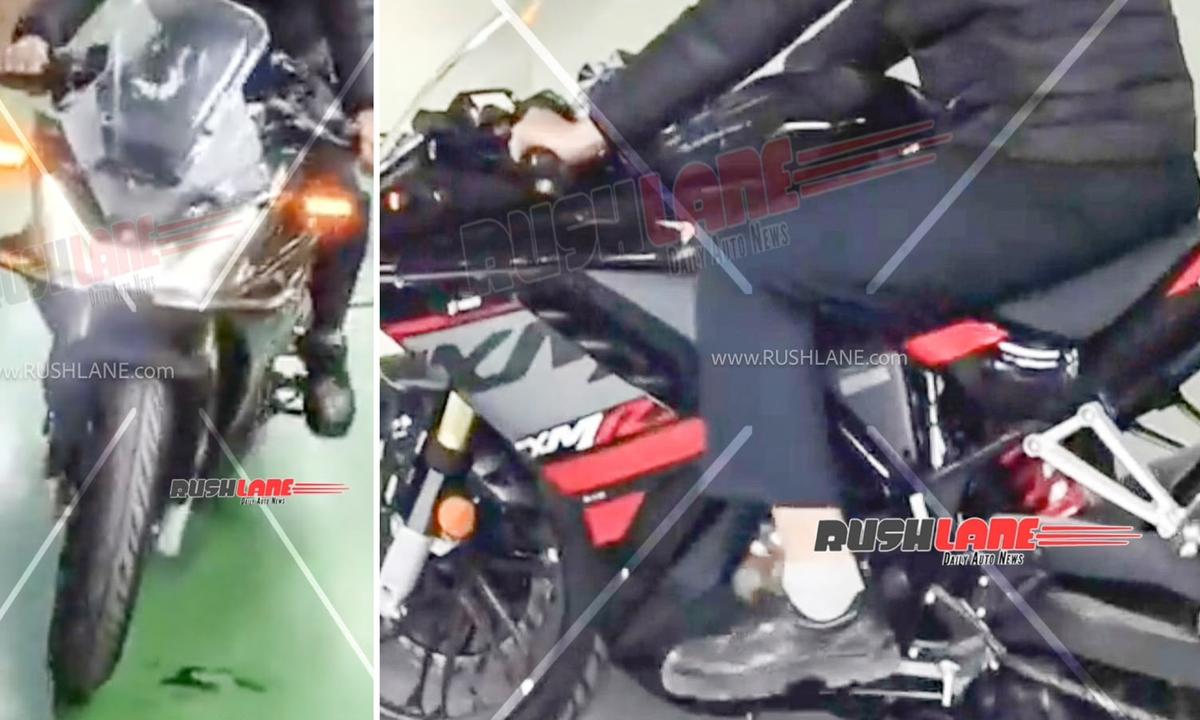
Hero MotoCorp’s engineering team has been caught testing the long-awaited Karizma XMR 250, a quarter-litre fully-faired motorcycle that will anchor the brand’s premium petrol-engine portfolio. Recent spy images show the bike without camouflage, confirming that a market debut is imminent—likely sometime in 2026.
Hero Karizma XMR 250: Design and visual identity
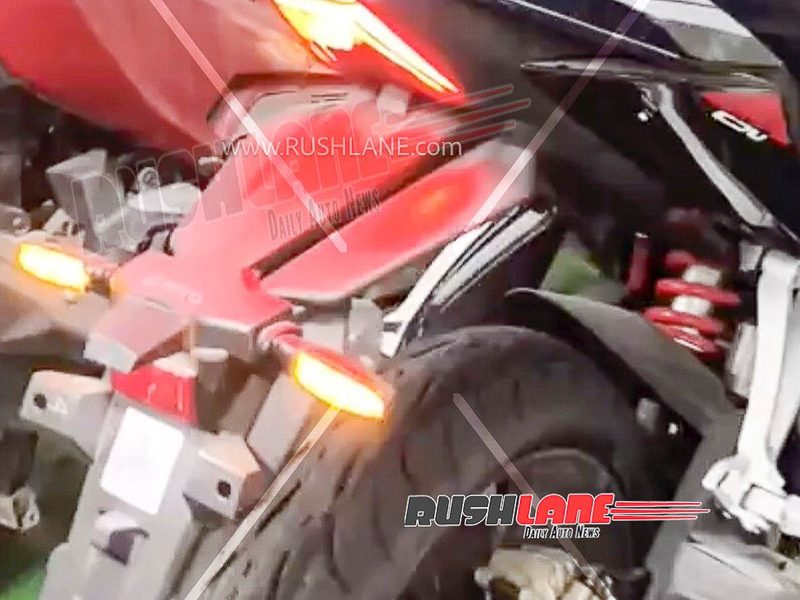
The undisguised test mule reveals Hero’s approach to scaling down the Karizma XMR platform. The motorcycle retains the aggressive, angular styling cues of its larger sibling—sharp headlight cowl, sculpted fuel tank, and a muscular tail section—but adapted to suit a middleweight frame. The gloss black paint with contrasting red accents seen on the test bike suggests Hero will offer bold colour options at launch.
Unlike heavily camouflaged prototypes, this sighting confirms Hero has not diluted the design language. The fairing geometry, side panels, and overall stance remain true to the Karizma DNA. This is important for brand positioning: buyers stepping up to a 250cc will expect visual aggression, not a watered-down version.
Where it fits in Hero’s lineup
Hero’s current 250cc offering—the Xtreme 250R—targets the commuter-to-middleweight crossover segment. The Karizma XMR 250, by contrast, will position itself as a pure-bred sport tourer. This distinction matters. Where the Xtreme leans toward daily usability and value, the XMR will emphasise performance credentials and premium fit-and-finish.
The Karizma XMR 250 will be Hero’s flagship in the ICE (internal combustion engine) space, sitting above the Xtreme 250R and the Karizma ZMR (which remains in the 210cc segment). For buyers who want a fully-faired, highway-capable machine without jumping to a 350cc or 400cc bike, this fills a gap.
Hero Karizma XMR 250: Expected powertrain and performance
Exact specifications remain unconfirmed, but the XMR 250 is expected to draw on Hero’s proven 250cc engine architecture. The powerplant will likely produce somewhere in the 20–25 bhp range, with peak torque around 20–22 Nm. These numbers would position it competitively against rivals like the Bajaj Pulsar NS 250 and the upcoming TVS Apache RTR 250.
A liquid-cooled, single-cylinder engine is probable—a departure from the air-cooled units in Hero’s current middleweight range. This would justify the premium positioning and deliver better thermal management for sustained high-speed riding. Transmission options will likely include a manual gearbox, with a possible automatic variant down the line.
Rivals and market positioning
The Karizma XMR 250 enters a segment where competition is heating up. The Bajaj Pulsar NS 250 has already established itself as the segment benchmark, offering sharp styling and adequate performance at a reasonable price point. TVS is readying its Apache RTR 250, which will emphasise sporty handling and modern features.
Where Hero’s offering could differentiate itself is brand heritage. The Karizma name carries significant equity among Indian riders—it’s synonymous with style and aspiration. If Hero prices the XMR 250 aggressively (likely between ₹1.8 and ₹2.1 lakh ex-showroom), it could siphon sales from the Pulsar while also attracting buyers hesitant about Chinese brands like Zongshen or Lifan.
What we make of it
The Karizma XMR 250 represents Hero’s attempt to reclaim lost ground in the premium middleweight segment. For years, Hero’s 250cc portfolio felt half-hearted—neither fully committed to performance nor properly equipped for highway touring. This new machine signals a change in strategy: Hero is willing to invest in a proper platform rather than simply rebadging an existing engine.
The undisguised spy shots suggest launch readiness, but Hero’s typical approach is to tease aggressively before revealing official specs. Expect a formal announcement within the next 2–3 months, with showroom availability by mid-2026. For buyers torn between the Xtreme 250R and a 350cc bike, the XMR 250 could prove to be the Goldilocks choice—more character than the former, less expensive than the latter.
Frequently asked questions
When will the Hero Karizma XMR 250 launch in India?
While an official date hasn’t been announced, spy shots suggest a 2026 debut. Hero typically launches new motorcycles during festive season or early calendar year, so expect news within the next few months.
How much will the Hero Karizam XMR 250 cost?
Exact pricing is unconfirmed, but based on segment positioning and rivals like the Pulsar NS 250, expect an ex-showroom price between ₹1.8 and ₹2.1 lakh depending on variant and features.
What engine will power the Karizam XMR 250?
Hero is expected to use a liquid-cooled 250cc single-cylinder engine producing around 20–25 bhp. A manual transmission is confirmed; an automatic option may follow later.