
Hyundai has just pulled forward its Pune facility ramp-up timeline by a full 24 months. What was originally scheduled for October 2028 will now happen in October 2026. For a company betting heavily on India as a manufacturing and export hub, this acceleration signals serious confidence—and serious production demands ahead.
Why the sudden rush?
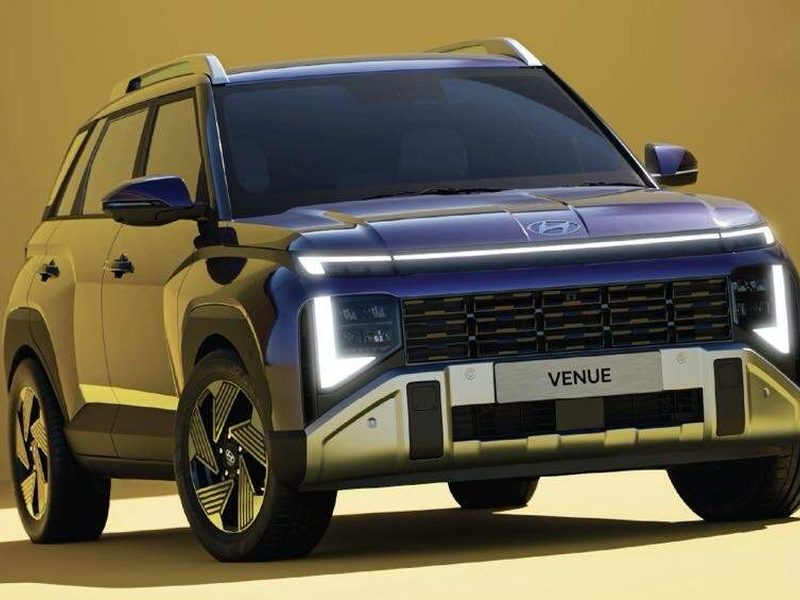
The answer sits in Hyundai’s global ambitions for the all-new Venue. The Korean carmaker is preparing to ship this compact SUV to approximately 35 markets worldwide, and India’s Pune facility is central to that strategy. Rather than spread production across multiple plants, Hyundai is consolidating: ramp up Pune faster, export harder, and capture market share before competitors do the same.
This isn’t just about the Venue either. The Hyundai Pune plant expansion signals a broader shift in how the company views India—not as a domestic market alone, but as a production powerhouse for global distribution. That’s a significant vote of confidence in Indian manufacturing quality and cost competitiveness.
What does this mean for India’s automotive sector?
Hyundai’s decision to accelerate the Hyundai Pune plant expansion reflects a larger trend: multinational carmakers are doubling down on India as a manufacturing base. With labour costs lower than most developed markets, improving supply chain infrastructure, and a growing domestic demand base to absorb fixed costs, India makes economic sense for global production.
For Hyundai specifically, the move creates urgency. The new Venue is expected to be more competitive than its predecessor—better equipped, more efficient, and more appealing to international buyers. Getting it into those 35 markets faster than planned gives Hyundai first-mover advantage in segments where rivals are still planning their own launches.
The Pune facility itself will need to scale production capacity significantly. That means more jobs, more supplier activity in the region, and more pressure on the local supply chain to keep pace. It’s the kind of industrial momentum that can transform a region’s automotive ecosystem.
The competitive angle
Maruti Suzuki, Toyota, and others already use India as an export base. But Hyundai’s willingness to front-load investment and accelerate timelines shows the company is serious about competing on volume globally, not just domestically. The Venue competes with the Maruti Brezza, Tata Nexon, and others in India—but exporting to 35 countries means competing with global compact SUVs too.
This acceleration also puts pressure on Hyundai’s supply chain partners. They’ll need to ramp up component production, quality control, and logistics capability to support a faster production schedule. For vendors already supplying Hyundai’s Sriperumbudur plant in Tamil Nadu, the Pune expansion offers growth opportunities—but only if they can meet stricter timelines and volume targets.
What about the Venue specifically?
The all-new Venue is expected to bring meaningful updates—sharper design, improved interiors, and potentially new powertrain options. For the Indian market, that means a refreshed competitor in the sub-4-metre SUV segment, which has become fiercely crowded. Globally, the Venue will face competition from the Volkswagen T-Cross, Kia Seltos, and various Chinese compact SUVs in markets where Hyundai is expanding.
The fact that Hyundai is confident enough to accelerate production suggests the company believes the new Venue has genuine appeal across multiple markets. That’s not a guarantee, but it’s a strong signal about internal product confidence.
The timeline and what’s next
Two years is a compressed window for ramping up manufacturing capacity, especially in a complex automotive plant. Hyundai will need to invest in additional machinery, hire and train workers, and coordinate with suppliers to ensure components arrive on schedule. October 2026 is less than two years away, so the company is already in execution mode—not planning mode.
Between now and then, expect announcements about capital investment, workforce expansion at the Pune facility, and possibly new supplier partnerships. The company may also pre-announce export allocations to key markets, signalling to dealers and customers that the Venue is coming soon.
The bottom line
Hyundai’s decision to accelerate the Hyundai Pune plant expansion by two years isn’t just a manufacturing story—it’s a statement about India’s role in global automotive supply chains. The company is betting that Indian-made products can compete internationally, and it’s willing to invest capital and take execution risk to prove it. For buyers, it means fresher Venues hitting showrooms sooner and more aggressive pricing as Hyundai scales volume. For the Indian automotive industry, it’s validation that we’re becoming a serious export base, not just a domestic market. Whether Hyundai can actually hit October 2026 without quality compromises is the real test ahead.
Frequently asked questions
Why is Hyundai accelerating the Pune plant expansion by two years?
Hyundai needs to ramp up production of the all-new Venue for export to around 35 global markets. Accelerating the Pune facility to October 2026 allows the company to meet international demand faster and capture market share ahead of competitors.
What is the original timeline for the Hyundai Pune plant expansion?
The facility was originally scheduled to reach full capacity by October 2028. The new accelerated timeline brings that forward to October 2026, a two-year advance.
Will the new Venue be exported from the Pune plant?
Yes. The all-new Venue will be produced at the Pune facility and exported to approximately 35 global markets, making India a key production hub for Hyundai’s international operations.