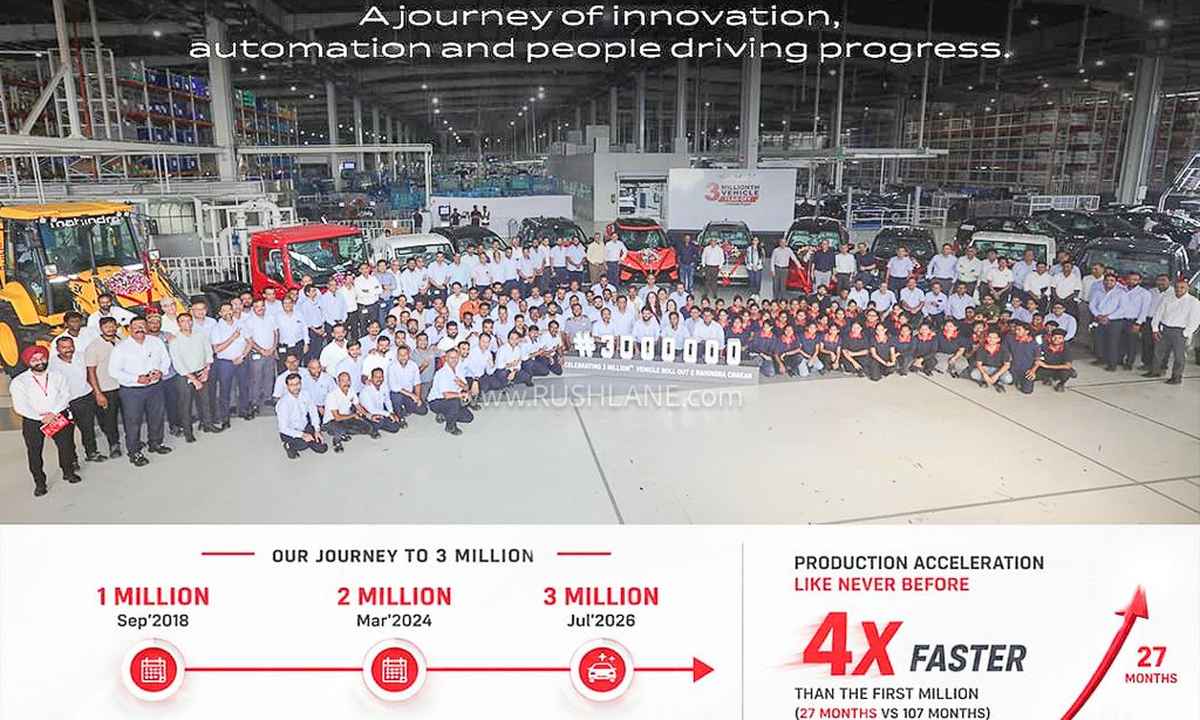
Mahindra’s flagship manufacturing facility in Chakan, Maharashtra has crossed a significant production threshold. The plant has now rolled out its 30 lakh vehicle since starting operations in December 2009—and it was none other than the Mahindra BE 6 electric SUV that marked this historic moment. The milestone underscores both the scale of the operation and the company’s pivot toward electric mobility.
What makes this achievement particularly striking is the velocity of recent growth. The Mahindra Chakan plant took roughly 15 years to produce the first 20 lakh units. But the last 10 lakh vehicles came off the assembly line in just 27 months. That acceleration tells you something about current demand—and about how aggressively Mahindra is ramping up capacity to meet it.
The Mahindra Chakan plant’s growth trajectory
The Chakan facility, located near Pune, has been Mahindra’s workhorse for over a decade. It began operations in late 2009 and has since become the group’s most productive single location. The plant manufactures a range of vehicles, from compact SUVs to sedans, and more recently, electric models like the BE 6.
The jump from 20 lakh to 30 lakh units in under two-and-a-half years reflects two parallel trends. First, the Indian SUV market has exploded in the past few years—buyers have decisively shifted away from sedans and hatchbacks toward taller, roomier vehicles. Second, Mahindra’s own product portfolio has become fresher and more competitive. Models like the XUV700 and the newly launched BE 6 are drawing customers who might have looked elsewhere five years ago.
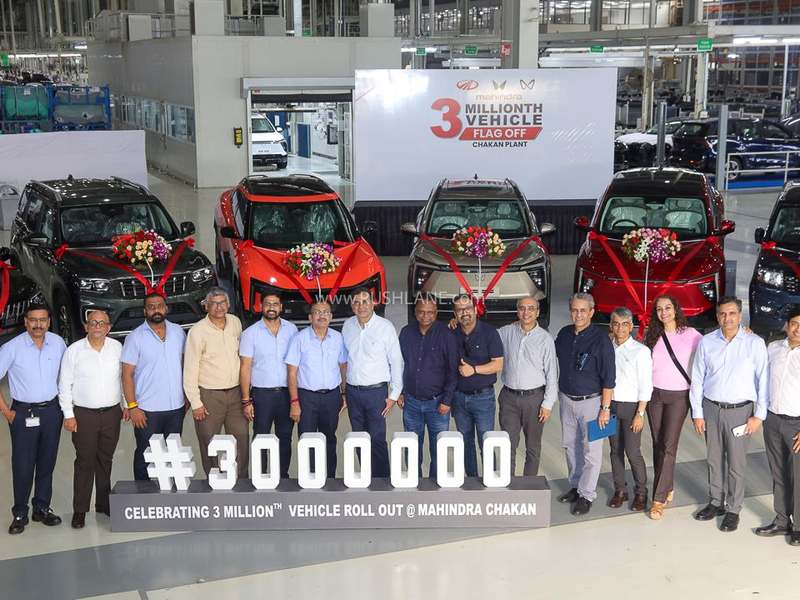
BE 6 as the milestone vehicle
The choice of the BE 6 to mark this 30 lakh milestone is symbolically important. This electric SUV is Mahindra’s answer to the growing demand for zero-emission family vehicles in India. It sits in a competitive segment alongside the Tata Nexon EV and the Hyundai Kona Electric, and early reception has been positive.
By rolling out the BE 6 as the landmark vehicle, Mahindra is signaling that its future—and the future of the Chakan plant—lies increasingly in electrified powertrains. The company has committed to launching multiple electric vehicles over the next few years, and Chakan will play a central role in that strategy.
What this means for buyers and the industry
For Indian car buyers, this production ramp-up has practical implications. Higher volumes typically mean better supply consistency, shorter waiting periods, and more competitive pricing as manufacturers spread fixed costs across larger production runs. If Mahindra can sustain this momentum, customers shopping for SUVs—whether petrol, diesel, or electric—should see more availability and potentially sharper prices.
At the industry level, the Chakan plant’s success demonstrates that Indian automotive manufacturing can scale rapidly when demand is there. This isn’t a case of excess capacity sitting idle; the plant is genuinely busy. That matters for India’s ambitions to become a global automotive hub. When a single facility can push out 10 lakh vehicles in 27 months, it shows the ecosystem—suppliers, logistics, labour, energy—can handle the load.
The broader context
Mahindra isn’t the only automaker investing heavily in manufacturing. Maruti Suzuki, Hyundai, and others are also expanding. But the Chakan plant’s growth rate stands out. Part of the reason is Mahindra’s focus on the SUV and electric segments, both of which are growing faster than the overall market.
The company has also benefited from strong export demand. Mahindra SUVs and commercial vehicles are shipped to markets across Africa, the Middle East, and Southeast Asia. That global presence helps keep the plant running at high utilization rates, even when domestic demand fluctuates.
What comes next
With 30 lakh vehicles now behind it, the Mahindra Chakan plant is unlikely to slow down. The company has announced plans to launch more electric vehicles under the BE sub-brand, and these will need manufacturing capacity. Chakan is the obvious choice for scaling production of these models.
The next milestone—40 lakh vehicles—could arrive faster than anyone expects. If the last 10 lakh took 27 months, and if Mahindra’s EV launches gain traction, the plant might hit 40 lakh within two years or so. That would be an extraordinary achievement for any manufacturing facility in India.
The bottom line
The Mahindra Chakan plant’s 30 lakh-vehicle milestone is more than just a corporate achievement. It reflects genuine shifts in the Indian car market—the dominance of SUVs, the emergence of electric vehicles, and the capacity of domestic manufacturers to scale quickly. For Mahindra, it validates years of investment in the facility. For buyers, it suggests that competition in the SUV and EV spaces will only intensify, which is good news for choice and pricing. The real test will be whether the company can maintain this momentum as it launches more electric models and faces stiffer competition from rivals also racing to electrify.
Frequently asked questions
When did the Mahindra Chakan plant start operations?
The plant began operations in December 2009. It has been Mahindra’s flagship manufacturing facility for over 15 years and is located near Pune, Maharashtra.
How long did it take to produce the last 10 lakh vehicles at Chakan?
The last 10 lakh vehicles were produced in just 27 months, showing a significant acceleration in production speed compared to earlier phases of the plant’s operation.
Why was the BE 6 chosen to mark the 30 lakh milestone?
The BE 6 represents Mahindra’s strategic shift toward electric vehicles. Using it as the milestone vehicle signals that the Chakan plant’s future will increasingly focus on zero-emission powertrains.