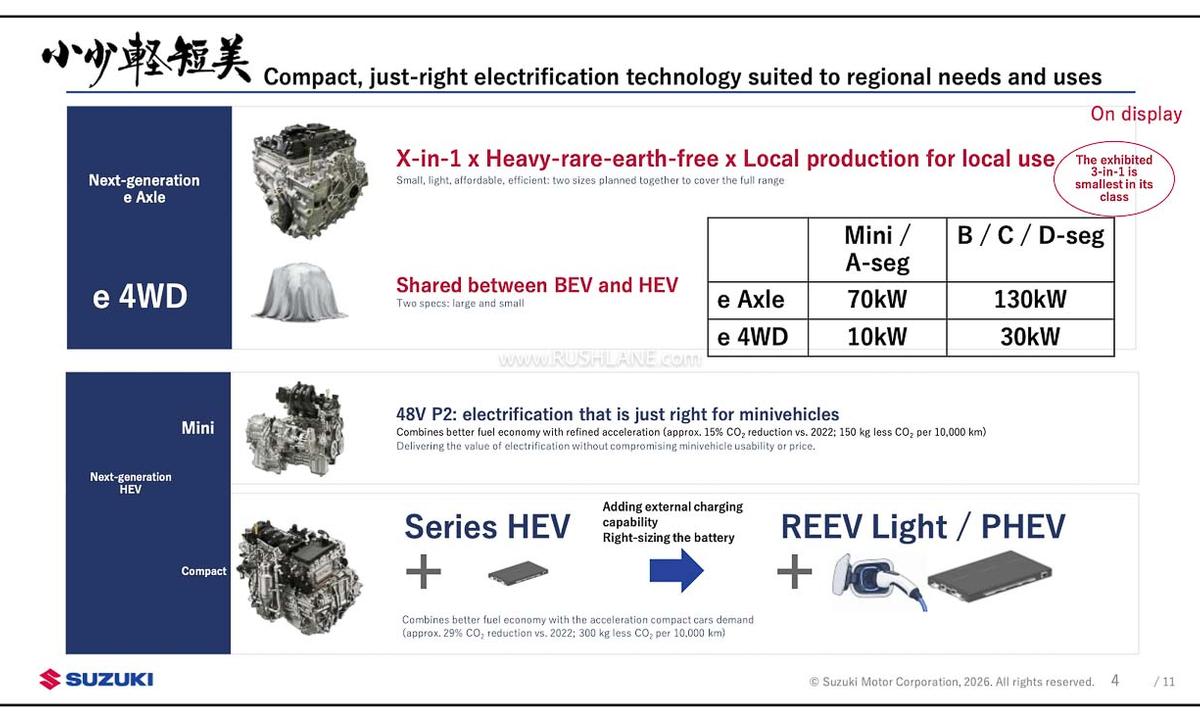
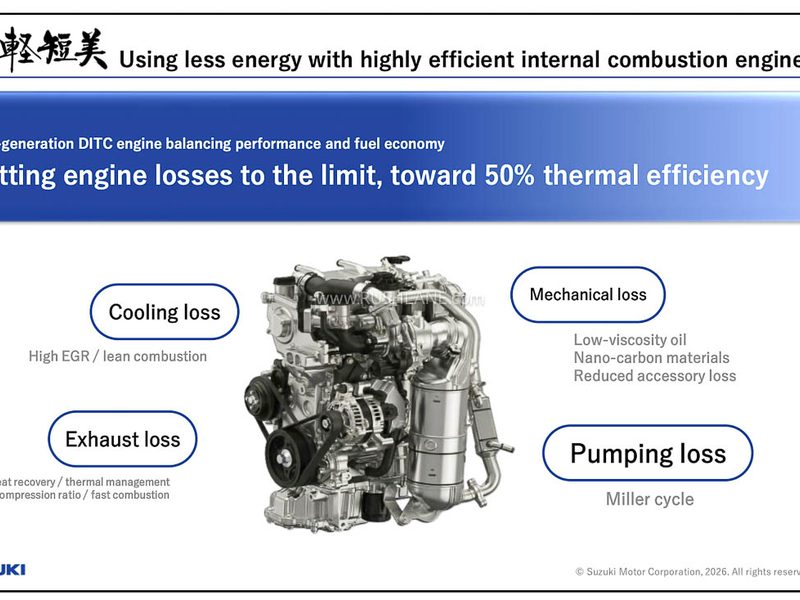
Suzuki isn’t sitting idle in India’s shifting powertrain landscape. The Japanese automaker is actively developing a new direct-injection turbo petrol engine specifically for growth markets—and India is squarely in that crosshairs. This move signals a serious rethink of how Suzuki plans to compete as buyers increasingly demand more power without abandoning fuel efficiency.
A multi-pronged powertrain strategy
Rather than betting everything on one technology, Suzuki is hedging across the board. The new turbo petrol engine forms the backbone of a broader portfolio that spans conventional petrol, CNG, hybrid, and fully electric options. For a brand that’s long relied on naturally-aspirated engines and CNG variants, this is a meaningful shift toward modernisation.
The turbo petrol angle is particularly interesting. India’s SUV buyers have warmed to turbocharged engines in recent years—witness the success of the Hyundai Creta’s 1.4-litre turbo and Kia Seltos’ similar unit. If Suzuki can deliver competitive power and torque figures without a significant cost premium, they could carve out real space in the compact SUV segment where Maruti currently plays it safe with naturally-aspirated mills.
Hybrid and plug-in compact cars on the horizon
Beyond the turbo petrol, Suzuki is eyeing hybrid powertrains for compact vehicles. This matters because the hybrid segment in India remains underpenetrated compared to markets like Japan or even Southeast Asia. Most buyers still associate hybrids with premium pricing or niche models. Suzuki’s focus on compact cars suggests they want to democratise hybrid technology—think affordable, practical family cars rather than luxury offerings.
The plug-in hybrid compact car plans are equally telling. PHEVs occupy a weird middle ground in India right now, caught between pure EVs (which offer better long-range economics) and conventional hybrids (which don’t need charging infrastructure). But for buyers in metro cities with home charging, or fleet operators with predictable routes, a plug-in compact could make sense. Suzuki is clearly preparing for a world where India’s charging ecosystem matures faster than most expect.
What this means for Maruti buyers
Here’s the thing: Suzuki owns Maruti Suzuki, so any new engine or powertrain technology Suzuki develops will eventually trickle down to Maruti’s lineup. That’s how the relationship works. If Suzuki’s turbo petrol engine lands in, say, a next-generation Vitara Brezza or even a Creta rival, it could shake up Maruti’s traditionally conservative approach to engine tuning.
For someone currently shopping a compact SUV and eyeing Maruti’s offerings, this suggests waiting might not be foolish. A turbocharged option could arrive within the next 18-24 months, potentially offering better performance credentials than what’s available today.
The bigger picture: hedging against uncertainty
Suzuki’s multi-powertrain approach reflects genuine uncertainty about which technologies India will ultimately embrace. Will buyers stick with petrol and CNG for the next decade? Will hybrids become mainstream? How fast will EV adoption accelerate? By developing across all fronts, Suzuki isn’t making a bet—it’s buying optionality. Whichever way the market tilts, they’ll have products ready.
That’s actually smart strategy for a company that’s historically been cautious in India. Rather than double down on one horse and potentially get it wrong, they’re preparing a full stable. The downside, of course, is execution. Developing multiple engines and powertrains simultaneously is expensive and complex. If Suzuki stumbles on quality or reliability, all these options become liabilities rather than assets.
The bottom line
Suzuki’s turbo petrol engine development and hybrid-EV plans represent a genuine shift in ambition. For years, Maruti Suzuki has been the sensible, affordable choice—but rarely the exciting one. If these new powertrains actually make it to showrooms with competitive pricing, that equation changes. A turbocharged Maruti SUV could finally give buyers a reason to choose the brand on performance, not just value. The question now is whether Suzuki can pull off the engineering and bring these to market on time. If they do, the compact SUV segment just got more interesting.
Frequently asked questions
When will Suzuki’s new turbo petrol engine arrive in India?
No official timeline has been announced. Based on typical development cycles, expect 18-24 months before these engines appear in Maruti Suzuki products, though this could vary depending on market readiness and regulatory approvals.
Will Maruti Suzuki cars get the new turbo petrol engine?
Very likely. Suzuki owns Maruti Suzuki, so new powertrains developed by Suzuki typically migrate to Maruti’s lineup. Compact SUVs like the Brezza or future models are potential candidates.
Why is Suzuki developing a turbo petrol engine if EVs are the future?
Suzuki is hedging across multiple powertrains because India’s market will remain mixed for the next decade. Turbo petrols offer better range and refuelling convenience than EVs, while hybrids bridge the gap—so Suzuki is preparing for all scenarios.