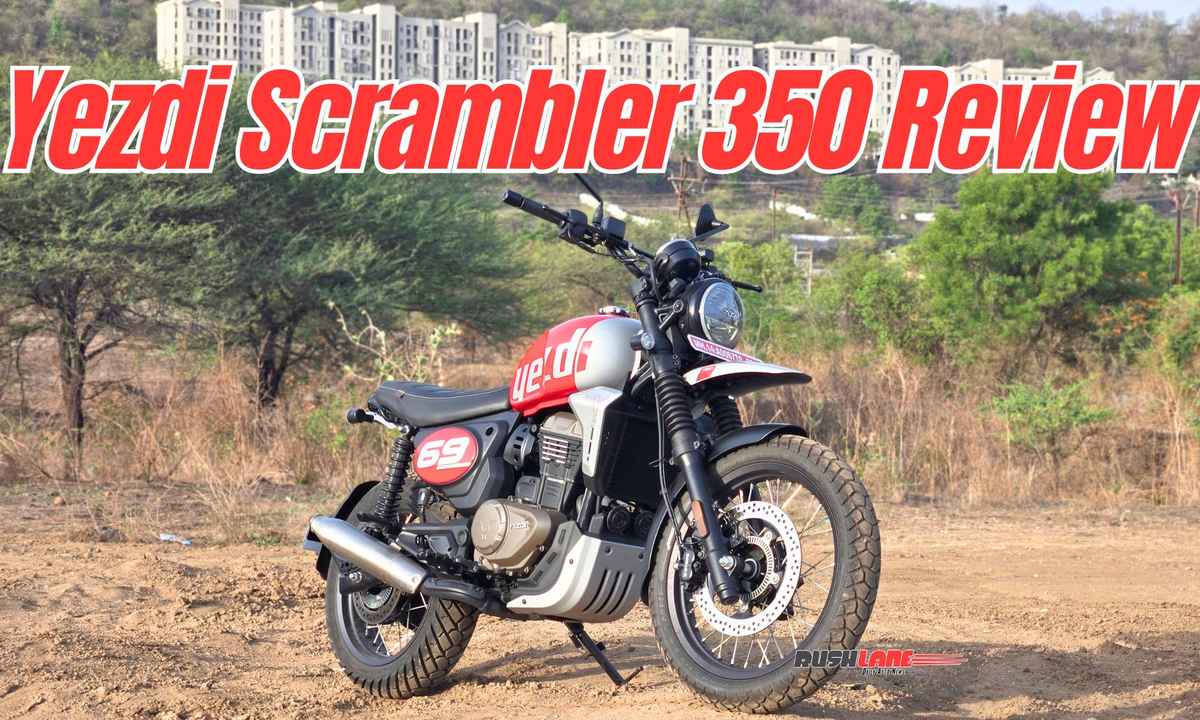
At ₹2 lakh, the Yezdi Scrambler 350 arrives in a segment where most buyers are still debating between a Royal Enfield Classic and a Jawa. But this retro scrambler isn’t trying to be either. We spent time with it across Pune’s broken roads, highways, and stop-start city traffic to see if it actually justifies the asking price.
Yezdi Scrambler 350 review: First impressions and design
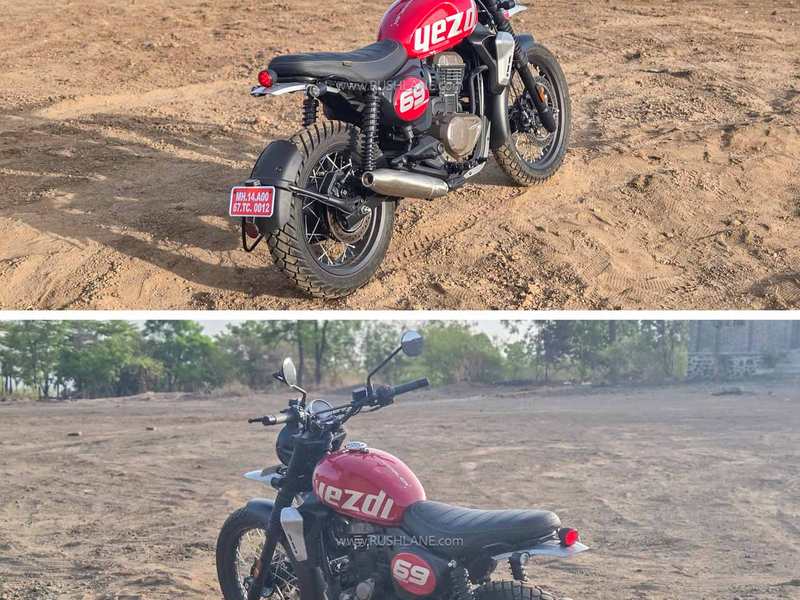
The moment you swing your leg over, the Scrambler 350 feels smaller and lighter than a Classic 350. That’s by design—this is a proper scrambler, not a cruiser pretending to be one. The teardrop tank, knobby tyres, and minimal bodywork give it a genuine dual-sport vibe that appeals if you’re tired of looking like everyone else at the traffic light.
Build quality is honest. No soft-touch plastics or leather here, but nothing feels cheap either. The seats are surprisingly comfortable for a bike that looks this stripped-down. Ground clearance is decent at 200 mm, which means you’re not scraping pegs on every pothole—a real consideration in Indian cities.
Engine, power, and real-world performance
The 349 cc air-cooled single-cylinder engine makes 20.2 bhp and 27.3 Nm of torque. On paper, that’s less than a Classic 350’s 20.2 bhp and 27.5 Nm, so you’re not getting more grunt. But the Scrambler 350 review reveals something the spec sheet doesn’t: the power delivery feels sharper. The engine revs more eagerly, and there’s less of that lazy cruiser feel.
Acceleration from 0-40 km/h is snappy. Overtaking in city traffic requires less planning. The five-speed gearbox slots smoothly, and the clutch bite is predictable—no nasty surprises. Fuel efficiency hovered around 38-42 km/l during mixed riding, which is respectable for a bike this fun to ride.
Highway riding is where compromises show. At 100 km/h, the engine is spinning comfortably, but there’s no extra surge if you need to accelerate hard. Vibes start creeping in above 90 km/h. It’s not a deal-breaker for weekend blasts, but daily 120 km/h commuting will wear you down.
Handling, brakes, and ride quality
This is where the Scrambler 350 earns its salt. The chassis feels planted even on badly patched roads. The telescopic forks and rear monoshock work together to absorb bumps without feeling floaty. Lean angles are generous—you can corner hard without the bike feeling nervous.
Braking is adequate. The 300 mm front disc and 240 mm rear disc aren’t class-leading, but they inspire confidence. ABS is standard, which matters on wet roads. Stopping distance from 60 km/h is honest rather than impressive—nothing to complain about, nothing to celebrate.
Tyres are MRF Revz tyres with a proper knobbly pattern. They’re not adventure-bike aggressive, but they grip well on tarmac and don’t slip on loose surfaces. Cornering grip is better than you’d expect from a bike at this price.
Practicality and real-world usability
The 15-litre fuel tank gives you a genuine 600+ km range, so fuel stops aren’t constant. The seat height of 800 mm is manageable for riders up to 5’10”, though shorter riders will feel on their tiptoes. Legroom is tight—your knees come up noticeably, which is typical for scramblers but worth knowing.
Switchgear is basic but functional. No fancy digital displays—just an analogue speedo and basic tell-tales. The headlight is bright enough for night riding. Mirrors are small but adequate. There’s no USB charging, no phone mount, no frills. Some will call this minimalism; others will find it frustrating.
Boot space is nearly non-existent. You’re carrying a backpack, not panniers. Weekend trips require proper luggage planning.
Yezdi Scrambler 350 review: Value and competition
At ₹2 lakh ex-showroom, the Scrambler 350 sits between the Royal Enfield Bullet 350 (₹1.4 lakh) and the Classic 350 (₹1.85 lakh). You’re paying a premium for the scrambler identity, not for raw performance. That’s fair if you actually want a scrambler. If you’re just looking for affordable 350 cc displacement, the Classic makes more sense.
Jawa’s 42 (₹1.99 lakh) is the real rival. It’s equally retro, equally fun, and nearly the same price. The Jawa feels more premium in hand, but the Scrambler 350 is more practical for actual riding. Waiting periods matter too—Jawa can stretch 6-8 months, while Yezdi has better inventory.
Resale value is the gamble. Yezdi is rebuilding trust after years away from the Indian market. A Classic 350 will hold value better simply because there are more buyers. But if the Yezdi brand stabilizes, early adopters could come out ahead.
The bottom line
The Yezdi Scrambler 350 review boils down to this: it’s a genuinely good bike for someone who wants a scrambler, not a cruiser in disguise. It handles better than a Classic, costs only slightly more, and looks different enough to turn heads. The engine is adequate, not exciting. Highway comfort is a compromise. But for city riding, weekend blasts, and the sheer novelty of owning something that isn’t a Bullet, it delivers.
The real question isn’t whether it’s good—it is. It’s whether you actually want a scrambler or whether you’re just drawn to the price tag. If it’s the latter, save ₹15,000 and buy a Classic 350. If you genuinely prefer the riding position, the handling, and the looks, the Scrambler 350 is worth the money. Just don’t expect it to set your heart on fire.
Frequently asked questions
Is the Yezdi Scrambler 350 faster than a Royal Enfield Classic 350?
No. Both produce 20.2 bhp and similar torque. The Scrambler feels quicker in city traffic due to its sharper engine character, but top speed and highway acceleration are comparable. The Scrambler’s advantage is handling and agility, not raw speed.
What is the real-world mileage of the Yezdi Scrambler 350?
During our Yezdi Scrambler 350 review testing in Pune, we recorded 38-42 km/l depending on riding conditions. Highway riding at constant speeds yields better mileage; city stop-start riding lowers it. The 15-litre tank gives a genuine 600+ km range.
Is the Yezdi Scrambler 350 suitable for long highway rides?
It’s adequate, not ideal. Vibes increase above 90 km/h, and the upright seating position can tire you on extended rides. It’s better suited for weekend 200-300 km trips than daily 150+ km commutes. Comfort peaks under 80 km/h.