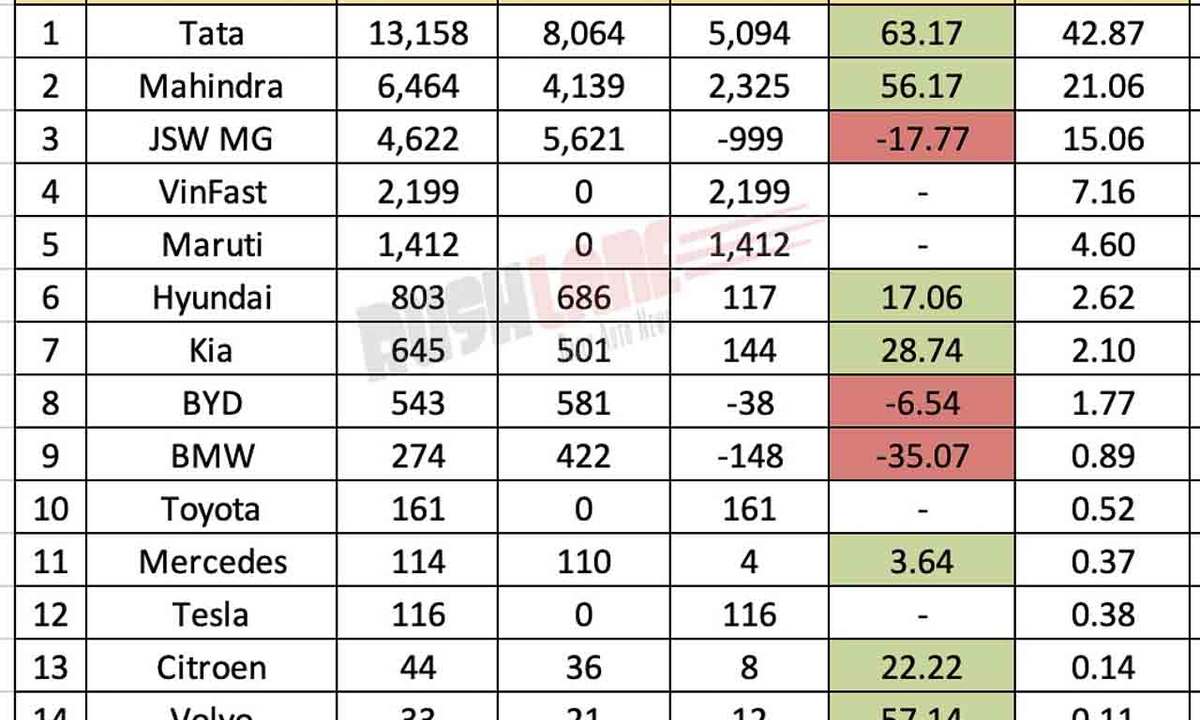
India’s electric car market in August 2026 tells a story of two giants hoarding the pie. Tata and Mahindra together grabbed nearly 64% of all electric car registrations that month—a commanding grip that leaves everyone else fighting for scraps.
This isn’t a fluke. The electric car sales August 2026 data reveals how deeply entrenched these two have become in a segment that was supposed to open up as more players entered. Instead, the market has consolidated around proven names with established charging networks and dealer support.
Who’s winning in electric car sales August 2026
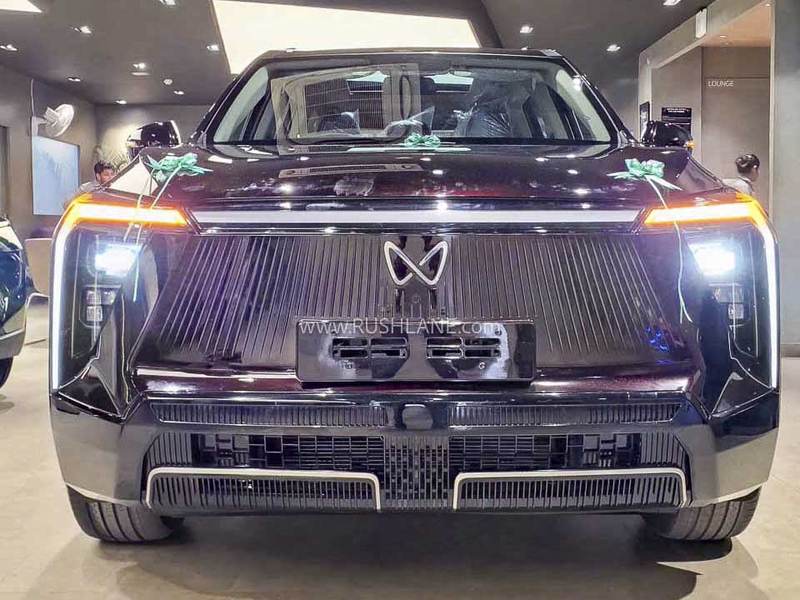
Tata’s Nexon EV and Tigor EV continue to be the volume drivers. The Nexon EV especially has become the default choice for buyers stepping into electric SUVs under ₹20 lakh. Mahindra’s XUV400 and the recently launched XUV.e8 are pulling their weight too, particularly in metro cities where charging infrastructure is decent.
Together, these two account for roughly two out of every three electric cars sold in India right now. That’s the kind of dominance usually seen in the petrol hatchback segment, not in a nascent EV market. What’s driving it? Pricing, first. Both have managed to keep entry-level electric cars under ₹15 lakh on-road in many cities. Second, they’ve built confidence—buyers know these brands will be around to service their cars in five years.
The challengers and new entrants
MG Motor, VinFast, Maruti, Hyundai, Kia, BYD, and BMW are all present in the electric car sales August 2026 breakdown, but none individually moves the needle much. MG’s ZS EV still sells, but it’s aging and waiting for a refresh. Hyundai’s Kona Electric and Ioniq 5 appeal to premium buyers. Kia’s EV9 is positioned even higher. Maruti’s entry into the segment through the e-Vitara is still ramping up production.
BYD and BMW represent two different strategies. BYD is chasing the mass market with aggressive pricing. BMW stays in the luxury corner. Neither has cracked the middle-class electric car buyer the way Tata and Mahindra have.
VinFast, the Vietnamese entrant, has been quiet in August. The brand faced supply challenges earlier in the year and hasn’t yet built the kind of dealer network that makes walk-in showroom visits easy for average buyers.
Why this concentration matters
A 64% duopoly in electric car sales August 2026 raises questions about competition and innovation. When two brands control the majority, there’s less pressure to innovate rapidly on battery technology, charging speed, or feature sets. Prices could stay sticky. Waiting periods might stretch—Tata’s Nexon EV already has a 4-6 week wait in some cities.
For the buyer, it’s a mixed bag. You get proven reliability and solid after-sales. But your options are limited. Want an electric coupe SUV under ₹18 lakh? Tata’s your answer. Want a three-row electric SUV? Mahindra’s XUV.e8 is one of the few. The lack of variety is real.
On the flip side, Tata and Mahindra’s dominance has forced them to invest heavily in charging infrastructure. Tata’s partnership with Fortum and others has added thousands of public chargers across India. Mahindra’s own charging network is expanding too. This infrastructure play benefits every EV buyer, not just those driving Tata or Mahindra cars.
What’s ahead for the segment
The electric car sales August 2026 snapshot is a moment in time. Several launches are expected in the coming months. Hyundai is readying the Ioniq 6 sedan. Kia has plans for a mass-market EV. Maruti’s e-Vitara will ramp up. BMW and Mercedes will keep chasing premium buyers. Chinese brands will keep trying to undercut everyone on price.
But here’s the reality: Tata and Mahindra’s lead isn’t just about first-mover advantage anymore. They’ve built brand equity in electric cars. When someone in Pune or Nagpur decides to go electric, the first two names that come to mind are Tata and Mahindra. That’s harder to dislodge than any price cut.
The question isn’t whether Tata and Mahindra will stay on top—they will. The question is whether anyone can carve out a meaningful second-tier position. MG had it once. Hyundai’s trying. Maruti and Kia are just getting started. For now, though, electric car sales August 2026 belongs to Tata and Mahindra, and that’s unlikely to change anytime soon.
Frequently asked questions
Which brands led electric car sales August 2026 in India?
Tata and Mahindra dominated, together capturing nearly 64% of all electric car registrations. Tata’s Nexon EV and Tigor EV, combined with Mahindra’s XUV400 and XUV.e8, were the primary volume drivers.
What other brands competed in electric car sales August 2026?
MG Motor, VinFast, Maruti, Hyundai, Kia, BYD, and BMW all had presence in the market, but individually captured smaller shares compared to the Tata-Mahindra duopoly.
Why do Tata and Mahindra have such a large share of electric car sales August 2026?
Both brands offer competitively priced entry-level electric cars under ₹20 lakh, have established dealer networks, strong after-sales support, and have invested in public charging infrastructure across India.