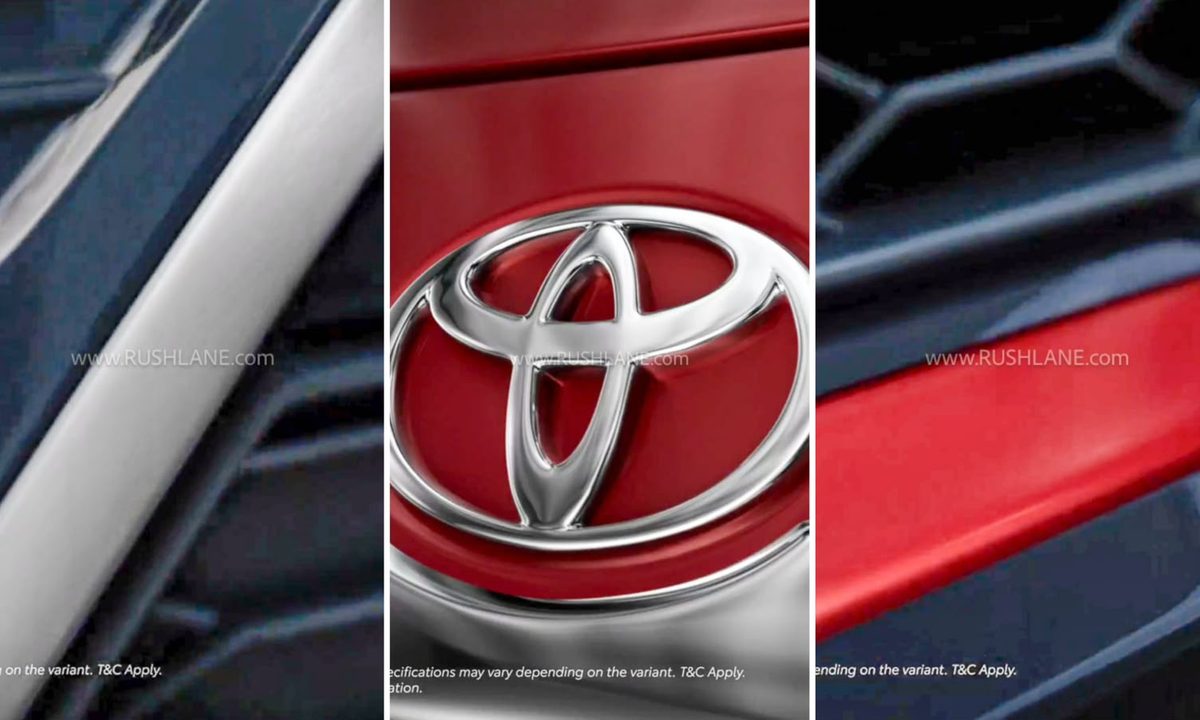
Toyota will bring the refreshed Glanza to Indian showrooms on October 14. The teaser images reveal what we’ve been waiting for: a noticeably sharper front end that departs from the current model’s understated look. This isn’t just a minor nip-and-tuck—the Toyota Glanza facelift signals Toyota’s intent to keep its badge-engineered Baleno competitor relevant in a fiercely contested segment.
What the teaser reveals about the Toyota Glanza facelift
The official teasers show a redesigned grille with a more assertive stance, paired with a revised front bumper that looks wider and more angular than before. The headlamp cluster appears to have sharper lines, hinting at a more contemporary design language. It’s a marked shift from the current generation’s gentler proportions. Toyota is clearly signalling that this refresh isn’t cosmetic theatre—the front fascia has been substantially reworked.
The bumper redesign suggests increased ground clearance or at least the visual impression of it, which matters in a segment where buyers scrutinise every millimetre of road presence. The grille, meanwhile, appears to carry more visual weight, possibly incorporating chrome or a new mesh pattern that we’ll see in full once the official reveal happens.
How this follows the Baleno facelift playbook
The Maruti Suzuki Baleno facelift arrived first, and now Toyota is following suit with its badge-engineered sibling. This is standard practice in the Suzuki-Toyota partnership—the Baleno gets refreshed, and the Glanza follows within weeks. However, the Toyota Glanza facelift isn’t expected to be a carbon copy. Expect different bumper styling, possibly a unique grille treatment, and perhaps distinct alloy wheel designs to give it a separate identity on the road.
The timing is strategic. By launching just after the Baleno, Toyota captures buyers who may have visited a Maruti showroom but prefer the Toyota badge for warranty and service reliability perceptions. In smaller towns and Tier-2 cities where Toyota’s service network is thinner, this positioning matters.
What else is coming with the refresh
While the teasers focus on exterior changes, the full update will likely include a revised interior with updated upholstery and possibly new touchscreen infotainment options. Equipment additions are expected—perhaps wireless charging, a larger display, or connected car features that match what the new Baleno offers. Nothing revolutionary, but enough to justify the refresh in buyers’ minds.
The powertrain is anticipated to remain largely unchanged: the 1.2-litre petrol engine with manual and automatic transmission options. Mileage figures and performance metrics are unlikely to shift significantly, but Toyota may introduce mild-hybrid technology if it mirrors the Baleno’s updates. We’ll know more on October 14.
Rivals to watch and pricing implications
The refreshed Glanza competes directly against the Hyundai i20, Tata Altroz, and the new Baleno itself—yes, Toyota’s own badge-engineered cousin. The i20 has a strong design narrative and a diesel option. The Altroz undercuts on price and offers a turbocharged petrol variant. The Baleno, meanwhile, will likely be marginally cheaper on-road since it’s the volume play for Maruti.
Pricing for the Toyota Glanza facelift is expected to remain competitive, sitting somewhere between ₹6.3 lakh and ₹9.5 lakh ex-showroom—roughly in line with the outgoing model. On-road costs in metro cities will push it closer to ₹7.5 lakh to ₹11 lakh depending on variant and local taxes. Toyota won’t undercut the Baleno significantly; the premium is justified by brand perception and after-sales confidence.
Why this matters for compact hatchback buyers
For someone weighing the Glanza against the i20 or Altroz, this refresh tilts the needle slightly. A sharper design appeals to younger buyers who don’t want their hatchback to look dated. The Toyota badge still carries weight in resale value, particularly in metros and among first-time buyers who value perceived durability. However, the Altroz’s diesel option and the i20’s aggressive styling remain compelling alternatives.
If you’re doing regular metro commutes and prioritise fuel efficiency, a manual petrol Glanza makes sense. If you cover long highway distances, the Altroz’s diesel is the smarter pick. If you want the latest tech and design, the i20 edges ahead. The Toyota Glanza facelift occupies the middle ground—safe, reliable, and now visually refreshed, but not a category-defining leap.
The bottom line
Toyota’s October 14 launch of the Glanza facelift is a necessary refresh in a segment that moves quickly. The redesigned front end signals that Toyota isn’t treating this as a forgotten stepchild to the Baleno—there’s genuine effort to differentiate. Whether that’s enough to win over buyers already leaning toward Hyundai’s i20 or Tata’s Altroz remains to be seen. Waiting periods will be key; if Toyota can deliver within 4-6 weeks while competitors stretch to 8-10, it gains a real advantage. We’ll reserve full judgment until the detailed specs and pricing are announced, but the teasers suggest a more confident, modern Glanza is coming.
Frequently asked questions
When is the Toyota Glanza facelift launching in India?
Toyota will officially launch the Glanza facelift on October 14, 2024. Bookings and showroom availability will follow shortly after the reveal.
How does the Toyota Glanza facelift differ from the new Baleno?
While both share the same platform and engine, the Glanza facelift features distinct exterior styling (grille, bumper, alloy wheels) and possibly unique interior trim options. The Baleno is typically priced lower and available with more variants.
What engine options will the refreshed Glanza have?
The Glanza is expected to retain its 1.2-litre petrol engine in manual and automatic forms. Mild-hybrid technology may be added to match the updated Baleno’s efficiency, but no diesel variant is anticipated.