
Maruti Suzuki has finally dropped the complete pricing sheet for its refreshed Baleno, and there’s a small surprise tucked inside. The entry-level variant undercuts what was initially teased — it now kicks off at ₹5.99 lakh ex-showroom, not the ₹6.10 lakh mentioned earlier. The 2026 Maruti Baleno price spans five trims across petrol manual, petrol AMT, and CNG manual drivetrains, topping out at ₹9.99 lakh for the fully loaded Alpha variant.
2026 Maruti Baleno price and variant breakdown
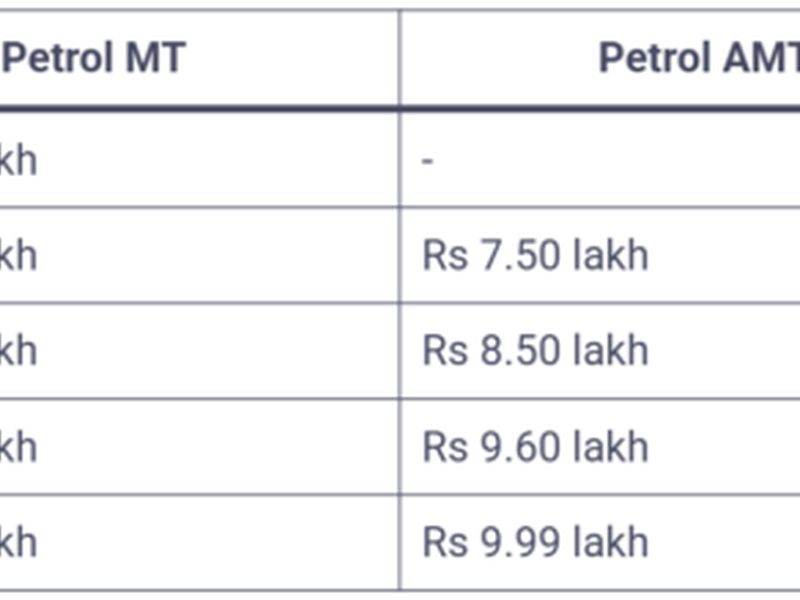
The lineup splits into Sigma, Delta, Zeta, Alpha, and Alpha (O) — that last one likely denoting an optional pack. Buyers choosing the base Sigma petrol manual get in at ₹5.99 lakh. Step up to the Delta and you’re looking at incremental jumps, while the Zeta trim sits in the mid-range sweet spot. The Alpha variants command the premium positioning, with the top-spec Alpha (O) hitting ₹9.99 lakh. That’s a ₹4 lakh spread across the range, which is fairly typical for Maruti’s tiering strategy.
What makes this interesting is the powertrain flexibility. Unlike some rivals that restrict certain engines to specific trims, Maruti offers petrol manual across most of the lineup, with AMT automatic available on higher trims. The CNG manual option — a significant pull for fleet buyers and daily commuters in Tier-2 cities — is positioned competitively within the range.
| Variant | Petrol Manual | Petrol AMT | CNG Manual |
|---|---|---|---|
| Sigma | ₹5.99 L | — | ₹7.04 L |
| Delta | ₹6.99 L | ₹7.49 L | ₹7.94 L |
| Zeta | ₹7.99 L | ₹8.49 L | ₹8.94 L |
| Alpha | ₹8.99 L | ₹9.49 L | ₹9.94 L |
| Alpha (O) | — | ₹9.99 L | — |
Prices are ex-showroom and subject to local taxes and dealer charges.
What’s changed from the old Baleno
This refresh marks Maruti’s attempt to keep the Baleno relevant in a segment that’s become increasingly crowded. The outgoing model had been on sale since 2015 — a solid run, but the segment has evolved. Rivals like the Tata Altroz and Hyundai i20 have raised the bar on features, design language, and cabin tech. The new Baleno brings a sharper exterior, updated interior styling, and likely a bump in creature comforts to stay competitive.
Mechanically, expect the same 1.2-litre petrol engine and the proven 1.2-litre CNG unit that powers the current model. Maruti isn’t known for radical engine overhauls in mid-cycle refreshes, so expect similar power and torque figures. The AMT gearbox remains the automatic option — it’s cost-effective and reliable, though not as smooth as a CVT or traditional torque-converter automatic.
How it stacks against rivals
At ₹5.99 lakh, the base Baleno undercuts the Tata Altroz (which starts around ₹6.5 lakh) and sits neck-and-neck with the Hyundai i20’s entry price. That’s a meaningful advantage for buyers who value brand trust and Maruti’s after-sales network — and in India, that’s a lot of buyers. The Altroz offers a more modern design and a larger touchscreen, but the Baleno’s simplicity and affordability appeal to cost-conscious families.
The CNG pricing is worth a close look. At ₹7.04 lakh for the Sigma CNG manual, it’s aggressively positioned against the Altroz CNG (around ₹8 lakh) and even undercuts some Hyundai offerings. For someone doing 40–50 km daily in a metro or Tier-2 town, the fuel savings justify the upfront cost within 3–4 years.
Waiting periods and real-world on-road cost
Maruti’s supply chain has stabilized significantly, so expect waiting periods to be short — typically 2–4 weeks depending on the variant and location. The ex-showroom prices quoted above will jump by ₹1.2–1.5 lakh once you factor in registration, insurance, and dealer charges, pushing the real on-road cost to around ₹7.2–7.5 lakh for the base petrol manual.
Resale value has historically been a Baleno strength. Maruti’s strong residual values mean you’ll recover 55–60% of your investment after 5 years, better than most rivals in this segment.
The bottom line
The 2026 Maruti Baleno price strategy is aggressive, and it shows the company isn’t taking its segment dominance for granted. At ₹5.99 lakh, it’s a no-brainer for first-time buyers who prioritize reliability and low running costs over cutting-edge design or tech. The CNG variant is particularly strong value — it undercuts the Altroz and offers better fuel economy than petrol. The AMT automatic, while not thrilling to drive, makes sense if you’re stuck in Bengaluru or Delhi traffic. The real question isn’t whether it’s good value — it clearly is — but whether Maruti’s incremental refresh is enough to hold off the Altroz’s design appeal and the i20’s feature-richness. For most Indian buyers, though, it probably will be. We’d reserve final judgement until we’ve spent time behind the wheel, but on paper, this is a compelling package at the price.
Frequently asked questions
What is the starting price of the 2026 Maruti Baleno?
The 2026 Maruti Baleno price starts at ₹5.99 lakh ex-showroom for the base Sigma petrol manual variant. The CNG manual begins at ₹7.04 lakh, while the top Alpha (O) AMT variant peaks at ₹9.99 lakh.
Which powertrain options are available in the 2026 Baleno?
The 2026 Maruti Baleno price list includes three powertrain choices: 1.2-litre petrol manual, 1.2-litre petrol AMT automatic, and 1.2-litre CNG manual. Not all combinations are available across every trim.
How does the 2026 Baleno price compare to rivals like Tata Altroz and Hyundai i20?
The 2026 Maruti Baleno price undercuts both rivals at the entry level. The base petrol starts at ₹5.99 lakh versus ₹6.5 lakh for the Altroz. The CNG variant at ₹7.04 lakh also undercuts the Altroz CNG, making it the most affordable CNG hatchback in its class.