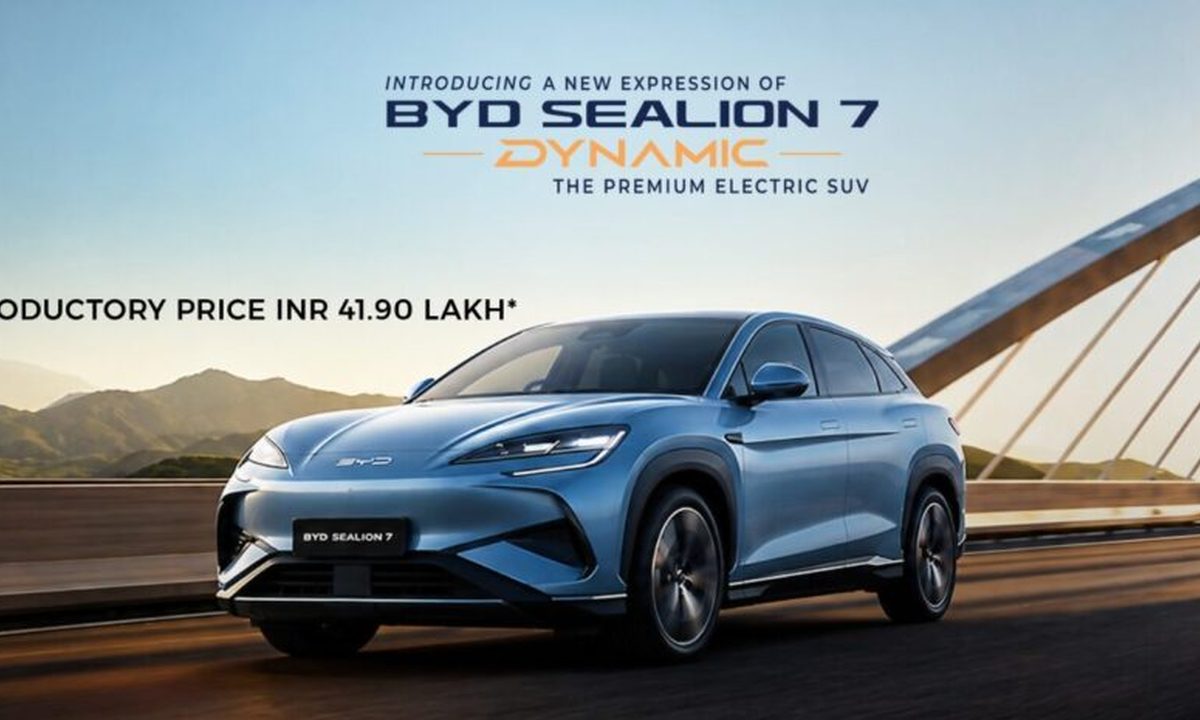
BYD Sealion 7 Dynamic just arrived at ₹41.90 lakh ex-showroom, and it changes the maths for anyone eyeing a premium electric SUV without the ₹50 lakh+ commitment. This new entry-level variant slots below the existing Sealion 7 lineup, making the Chinese carmaker’s flagship EV more accessible to a wider slice of India’s growing EV buyer pool.
Pricing and positioning of BYD Sealion 7 Dynamic
At ₹41.90 lakh, the BYD Sealion 7 Dynamic undercuts its own siblings and positions itself as the gateway to BYD’s premium electric SUV range. This introductory price point matters because it plants the Sealion 7 in territory where traditional petrol SUVs still dominate—think mid-size family haulers that buyers have relied on for years. For someone weighing an electric leap, that price tag makes the conversation less about sacrifice and more about value.
The Dynamic trim is BYD’s deliberate move to broaden appeal. Historically, Chinese EV makers in India have struggled with volume because their entry-level variants felt too bare-bones. This time, BYD seems to have learned that lesson.
Battery, range, and real-world implications
The BYD Sealion 7 Dynamic packs a 71.8 kWh Blade Battery paired with a claimed NEDC driving range of 520 km on a single charge. Now, NEDC figures are notoriously generous—real-world range typically lands 15–25% lower depending on driving conditions, road terrain, and climate. In practical terms, you’re looking at somewhere between 390–440 km in everyday use, which is still solid for metro commutes and occasional highway runs.
That 71.8 kWh pack is BYD’s own lithium iron phosphate (LFP) chemistry, which means better thermal stability, lower degradation over time, and—critically—cheaper replacement costs down the line compared to conventional NCA/NCM cells. For a buyer considering long-term ownership, that’s a hidden asset.
Charging speed isn’t detailed in the announcement, but BYD’s typical DC fast-charging setup gets these packs to 80% in under 30 minutes at a 120 kW charger. At home on a 7 kW AC wall box, expect 10–11 hours for a full top-up.
What the BYD Sealion 7 Dynamic offers versus rivals
The competitive landscape matters here. At ₹41.90 lakh, the BYD Sealion 7 Dynamic sits between the Volkswagen ID.5 (starting around ₹48 lakh) and the Skoda Enyaq (from ₹45 lakh upwards). It’s also in the ballpark of the Volvo EX90 on-road pricing, though that’s a different beast entirely. Against homegrown options like the Tata Nexon EV Max (₹17–18 lakh), the Sealion 7 is a full segment up—larger, more feature-rich, and aimed at buyers who see their EV as a statement, not just a practical swap.
Size-wise, the Sealion 7 Dynamic is a proper mid-to-large SUV with a 4,740 mm length, 1,900 mm width, and a wheelbase of 2,920 mm. That translates to genuinely spacious rear legroom and a boot that can swallow luggage for a family of five on a weekend trip. The Nexon EV Max, by contrast, is more compact and city-focused.
Interior space and comfort are where the Sealion 7 Dynamic flexes. Expect a panoramic sunroof, a large central touchscreen (likely 10.25 inches or bigger), premium upholstery, and ambient lighting—the kind of kit that justifies the premium over a petrol mid-size SUV.
Market timing and buyer psychology
BYD’s move to launch an entry variant now is tactically shrewd. India’s electric SUV market is maturing. Early adopters have already bought; now the carmaker needs volume, and volume comes from buyers who are curious but price-sensitive. At ₹41.90 lakh, the Sealion 7 Dynamic sits in a sweet spot where finance options feel manageable (roughly ₹60,000–70,000 per month on a 5-year loan), and the ownership cost per km beats petrol equivalents by a comfortable margin.
Waiting periods and booking amounts are likely to be aggressive—expect a ₹1–2 lakh booking deposit and deliveries within 2–3 months, standard for BYD’s current production cadence in India.
The catch: charging infrastructure and resale
Here’s where buyers need to think hard. The Sealion 7 Dynamic’s 520 km range is only as useful as India’s charging network allows. In Tier-1 metros like Delhi, Mumbai, Bengaluru, and Hyderabad, you’re fine. In Tier-2 cities and smaller towns, the charging ecosystem is still patchy. Road trips require planning, not spontaneity. Resale value is another wildcard—BYD’s brand equity in India is still building, and five years from now, the used Sealion 7 Dynamic may not hold value as robustly as a Tata or Mahindra EV would. That’s a real consideration for buyers who trade in every 5–6 years.
The bottom line
The BYD Sealion 7 Dynamic makes sense if you’re a metro-based buyer who wants a spacious, tech-laden electric SUV without stretching past the ₹45 lakh ceiling. It undercuts European rivals, offers genuine range for daily driving, and comes with BYD’s proven battery tech. But it’s not the car for someone in a charging-sparse region or someone who values resale value above all else. The real question is whether BYD can build service networks and charging partnerships fast enough to keep buyers confident. If they do, this Dynamic variant could genuinely shift volume numbers. If not, it remains a niche play for early EV adopters with deep pockets and city-centric lives.
Frequently asked questions
What is the real-world driving range of the BYD Sealion 7 Dynamic?
The claimed NEDC range is 520 km, but real-world driving typically yields 390–440 km depending on traffic, terrain, and climate. City driving and highway speeds both impact efficiency differently, so expect variance based on your usage pattern.
How does the BYD Sealion 7 Dynamic price compare to petrol SUVs?
At ₹41.90 lakh ex-showroom, it’s positioned above mass-market petrol SUVs like the Creta (₹10–16 lakh) but offers significantly lower per-km running costs and zero tailpipe emissions, making the premium worthwhile for buyers in charging-enabled areas.
Is the BYD Sealion 7 Dynamic suitable for long highway drives?
Yes, with 520 km claimed range and DC fast-charging capability, highway trips are feasible with charging stops. However, charging infrastructure outside metro cities remains sparse, so planning is essential for non-metro routes.