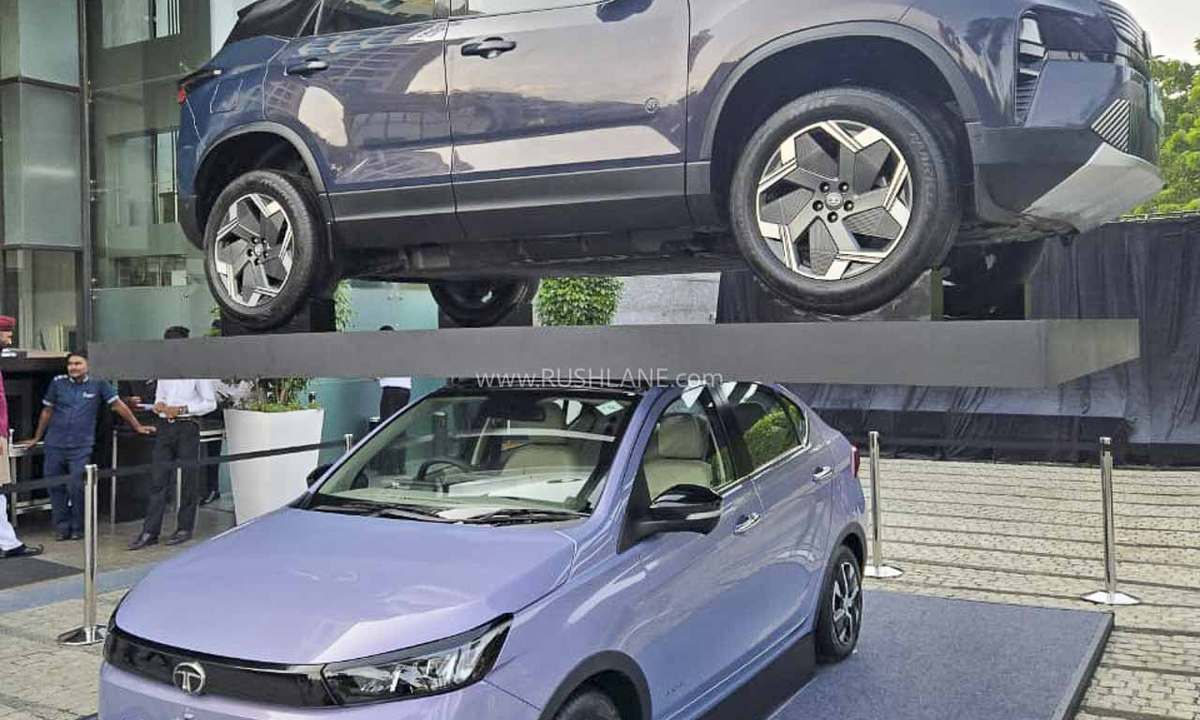
Tata Motors just pulled off one of the more audacious marketing stunts we’ve seen in a while. To prove the Tata Aeris structural strength, the company literally stacked a Harrier EV on top of the sedan’s roof and then drove it. Not a stationary display—the car actually moved under the weight of another vehicle bearing down on it.
This isn’t your typical safety demonstration. While most manufacturers rely on crash test ratings or static load tests, Tata chose a more visceral approach: show, don’t tell. The message is unmistakable—this sedan can take punishment.
How the demonstration worked
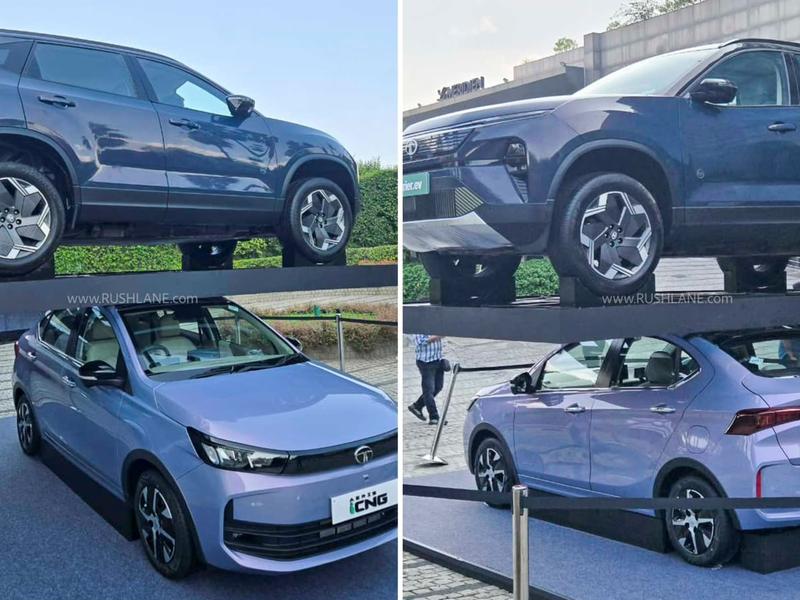
The stunt involved placing a full Harrier EV (the electric SUV variant, no less) directly on the roof of an Aeris sedan. After that, Tata released a video showing the Aeris engine starting, the vehicle moving forward, and then navigating through a rubble-strewn area. The sedan didn’t crumple. The roof didn’t cave. The doors still opened properly afterward.
The company also conducted a separate rubble demonstration where the Aeris was driven over debris to further stress-test the platform. These aren’t controlled lab conditions—they’re real-world scenarios designed to instill confidence in potential buyers.
For context, the Harrier EV tips the scales at around 1,650 kg depending on the variant. Placing that mass on top of a sedan’s roof and then asking the sedan to move is a high-stakes bet on engineering. If the structure fails, you’ve got a very expensive, very public failure. Tata clearly felt confident enough to take that risk.
Why Tata Aeris structural strength matters
The Aeris is Tata’s new mid-size sedan, entering a segment where buyers are increasingly conscious of safety credentials. The Maruti Ciaz, Honda City, and Hyundai Verna dominate this space, and all of them have established reputations for reliability. A new entrant needs to justify its existence, and raw structural rigidity is one way to do it.
Crash safety depends on three things: structure (how well the frame absorbs impact), crumple zones (controlled deformation to dissipate energy), and restraint systems (airbags, seatbelts). The Aeris’s structural strength is clearly being positioned as a core differentiator. If Tata can back that up with a solid Global NCAP or BHARAT NCAP crash test rating down the line, this demonstration becomes more than just theater—it becomes evidence.
For buyers in Tier-2 and Tier-3 towns, where road infrastructure is rougher and accidents more common, this kind of assurance resonates. You’re not just buying a car; you’re buying peace of mind for your family.
The competitive angle
The Ciaz has long been the volume leader in this segment, and it’s known for durability rather than cutting-edge features. The City appeals to buyers who want a more premium feel. The Verna straddles both camps. The Aeris needs to carve out its own identity, and emphasizing structural integrity is smart positioning.
Maruti hasn’t made a song and dance about the Ciaz’s platform strength in recent years. Honda’s safety messaging tends to focus on technology (Honda Sensing suite). Hyundai leans on warranty and features. Tata is saying: forget the frills, this thing is built solid. It’s a bold claim, and the Harrier-on-roof stunt is designed to make it stick in buyers’ minds.
That said, structural strength alone doesn’t sell cars. The Aeris will need competitive pricing, a decent feature set, reasonable fuel efficiency, and a reliable service network. Tata’s dealer presence has improved significantly, but it’s still not as ubiquitous as Maruti or Hyundai. That’s a real barrier for buyers in smaller towns who worry about resale and after-sales support.
What we make of it
The stunt is effective marketing, no question. It’s memorable, it’s shareable, and it directly communicates a benefit that matters—safety. But demonstrations like this can also backfire if they feel gimmicky or if the actual product fails to live up to the hype.
We’ll reserve judgment on whether the Aeris truly delivers on Tata Aeris structural strength until independent crash test results arrive. A stacked-vehicle display proves the frame can handle a static load, but a real-world collision involves different forces, angles, and velocities. That said, if Tata is willing to put this much engineering confidence on display, they’re probably banking on solid crash test ratings to follow.
For buyers seriously considering this segment, the Aeris deserves a proper test drive and a close look at the warranty terms. The structural strength story is compelling—just make sure the rest of the package justifies the investment.
Frequently asked questions
How did Tata demonstrate the Aeris structural strength?
Tata placed a full Harrier EV SUV on the roof of an Aeris sedan and then drove the car forward, including through rubble, to showcase the platform’s rigidity and crash safety credentials. The vehicle started, moved, and remained structurally intact after the demonstration.
Why is structural strength important in a mid-size sedan?
Structural rigidity is a key component of crash safety. A stronger frame absorbs impact energy better during collisions, protecting occupants. For buyers in India where road conditions vary widely, proven structural strength is a major confidence factor.
How does the Aeris compare to rivals like the Ciaz and City?
The Ciaz leads the segment on durability and value, while the City appeals to premium buyers. The Aeris is positioning itself on structural safety and engineering strength. Final judgment depends on pricing, features, and independent crash test ratings.