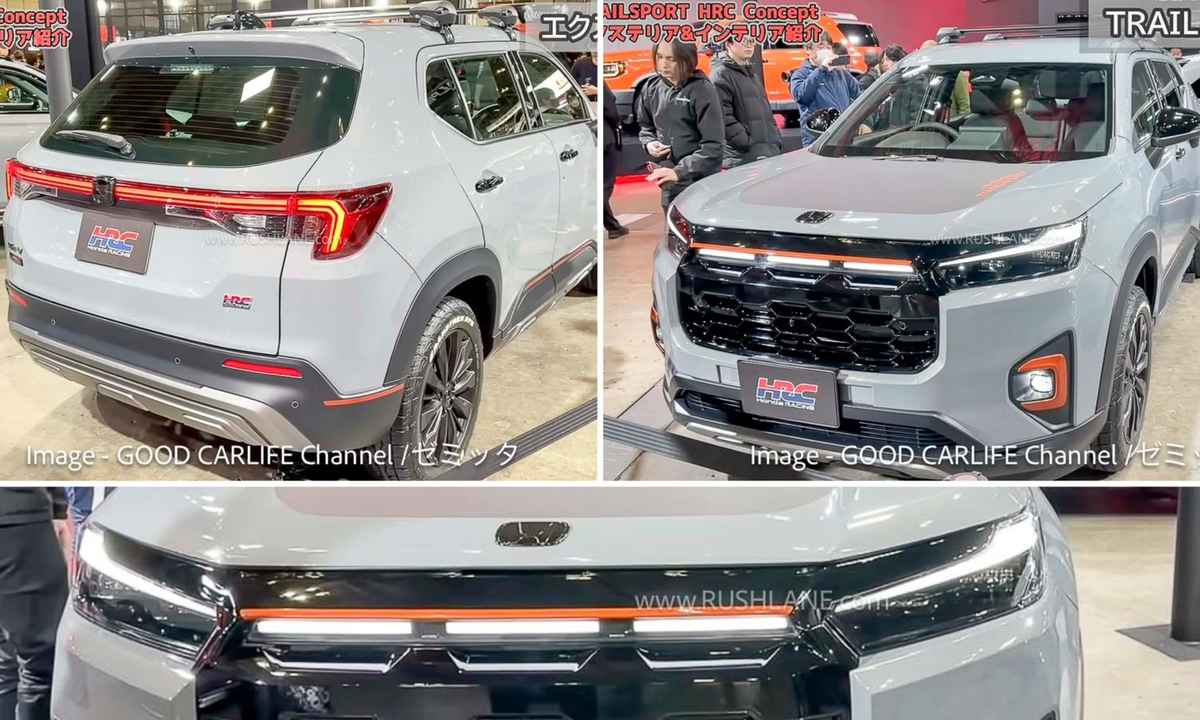
Honda’s refreshed take on the Elevate is nearly here, and the first hints suggest this isn’t just a cosmetic touch-up. The Japanese carmaker has begun teasing the updated model with LED lighting signatures and a redesigned bonnet emblem that bear a striking resemblance to the WR-V TrailSport HRC Concept unveiled in Japan earlier this year. For buyers considering the current Elevate, this timing matters — a mid-life refresh typically signals Honda’s commitment to keeping the model competitive, though it also raises the question of whether you should wait.
What the Honda Elevate facelift reveals so far
The teasers confirm fresh LED headlight and taillight designs that mirror the styling language of Honda’s concept vehicle. The new bonnet badge, too, appears to draw inspiration from the TrailSport HRC theme, hinting that Honda is positioning the Elevate with a slightly more rugged, adventure-ready character. This isn’t accidental — it’s a deliberate nod to a design direction Honda showcased internationally, now being adapted for the Indian market.
Beyond lighting, expect the facelift to carry forward the Elevate’s core appeal: a practical seven-seater SUV with a commanding driving position and decent boot space. The current model has carved out a solid niche against rivals like the Kia Carens and Maruti XL6, so Honda is unlikely to mess with the formula dramatically. Instead, the refresh will focus on keeping it visually fresh and adding incremental feature upgrades.
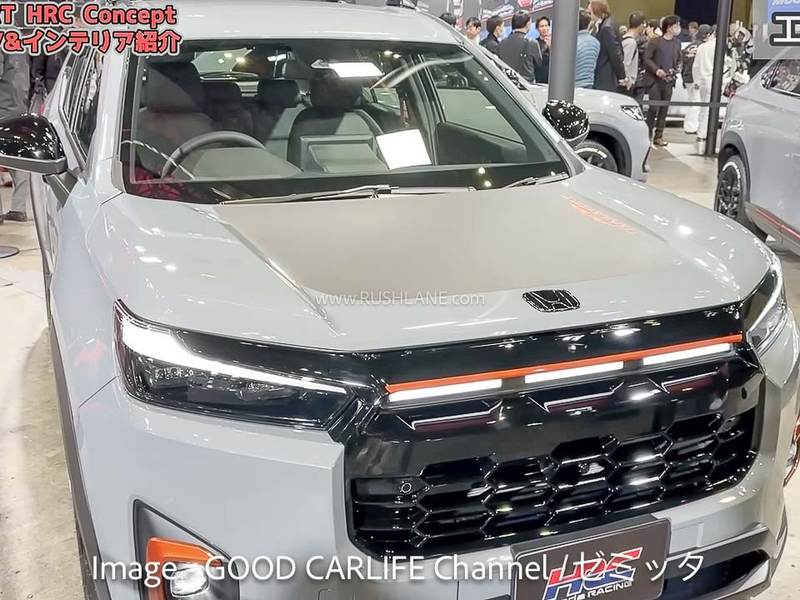
Design language and HRC concept connection
The TrailSport HRC Concept shown in Japan carried a sportier, more aggressive stance than the standard WR-V. By borrowing visual cues from that concept — particularly the LED signatures — Honda is subtly signalling that the Elevate isn’t just a family hauler. It’s positioning the facelift as something with a bit more character, even if the mechanical underpinnings remain largely unchanged.
This design strategy makes sense. In India’s SUV market, buyers increasingly want their vehicles to look the part, not just perform it. A sharper LED light signature costs little to implement but communicates freshness. The bonnet badge change, similarly, is a low-cost way to refresh the visual identity without expensive platform overhauls.
What hasn’t changed — and what might
The current Elevate’s 1.5-litre petrol engine (118 bhp, 145 Nm) and 1.5-litre diesel (98 bhp, 200 Nm) are unlikely to see significant updates. Honda’s focus with this facelift appears to be on aesthetics and possibly cabin tech. Expect a refreshed infotainment system, possibly with improved smartphone integration, and perhaps some new upholstery options to match the refreshed exterior.
Safety features may also get a bump. The current model offers six airbags and ABS across variants, but Honda could add electronic stability control or a rear-view camera as standard on lower trims — moves that would align with competitor offerings and customer expectations.
Timing and market implications
The Elevate launched in late 2021 and has sold steadily, though it hasn’t dominated the segment. A facelift after roughly three years is textbook strategy for Honda, keeping the model relevant without waiting for a full generational change. For potential buyers, the question is straightforward: if you’re in the market now, do you wait for the refresh or grab the current model at potential discounts?
Typically, dealers begin clearing stock ahead of a facelift launch, which could mean better deals on outgoing inventory. However, if you’re patient and can wait a few months, the refreshed model will offer newer styling and likely minor feature improvements — worth considering if you plan to keep the car for 5+ years.
How it stacks against rivals
The Elevate competes primarily with the Kia Carens (₹10.45–17.45 lakh) and Maruti XL6 (₹9.74–15.49 lakh). The Elevate’s current pricing sits between ₹10.5–16 lakh across variants. A facelift rarely triggers major price hikes, so expect the refreshed model to land in a similar band. The Carens offers a more premium interior and hybrid option; the XL6 undercuts on price. The Elevate’s strength lies in its spacious third row and Honda’s reliability reputation. The facelift’s fresher design could help it stand out on showroom floors, though it won’t fundamentally alter the segment dynamics.
The bottom line
The Honda Elevate facelift appears to be a sensible mid-life refresh rather than a revolutionary overhaul. The LED lighting and HRC-inspired design language signal that Honda understands the importance of visual freshness in a crowded segment. For buyers genuinely interested in the Elevate, the refresh makes it worth waiting for — the styling improvements are meaningful enough to justify a few months’ patience. But if you need a three-row SUV now and can negotiate a solid deal on the current model, you won’t be left with a dated-looking car. The real test will come once Honda reveals the full spec sheet and pricing; that’s when we’ll know if the facelift delivers genuine value or just cosmetic window-dressing.
Frequently asked questions
When will the Honda Elevate facelift launch in India?
Honda hasn’t announced an official launch date yet, but based on the teaser campaign, expect it within the next 2–3 months. The company typically builds anticipation over 4–6 weeks before a reveal.
Will the Honda Elevate facelift get a new engine?
No major powertrain changes are expected. The current 1.5-litre petrol and diesel engines will likely continue, though minor refinements and updated emission norms compliance are possible.
How much more expensive will the facelift be?
Facelifts rarely trigger significant price increases. Expect the refreshed Elevate to be priced within ₹50,000–₹1 lakh more than the current model, if at all. Final pricing will be announced at launch.