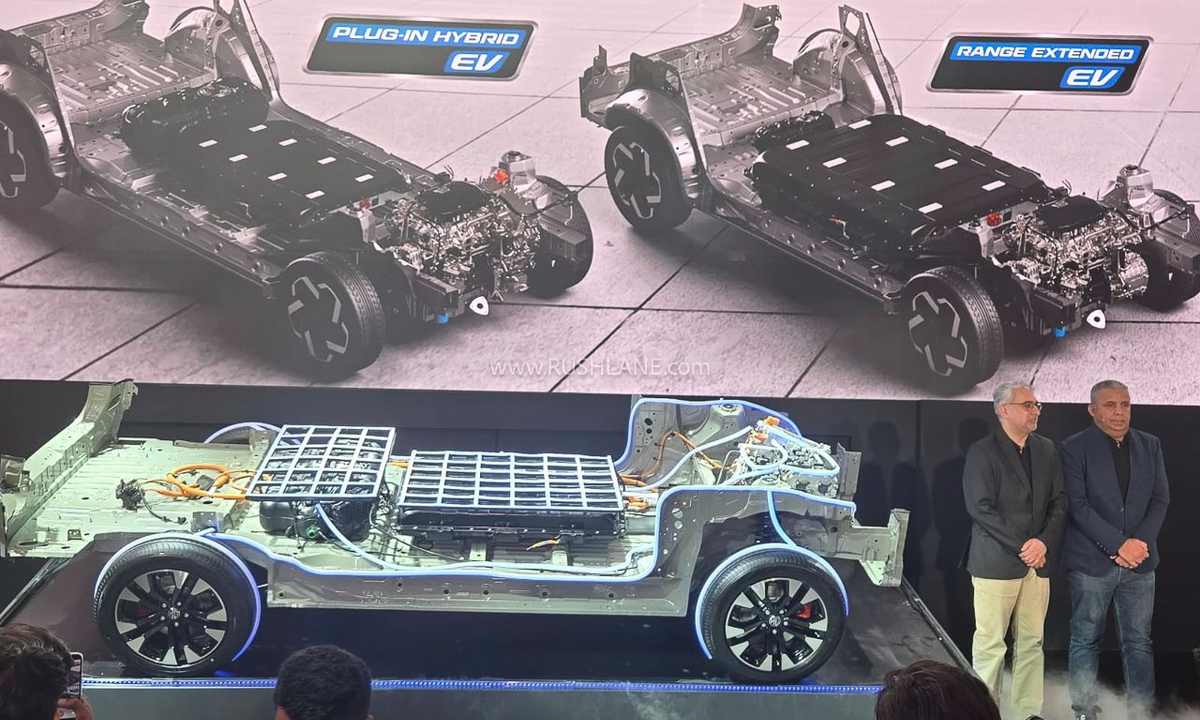
JSW MG Motor India has pulled back the curtain on its ambitious platform strategy, unveiling the ADAPT (Advance Drive Architecture Platform Technology) architecture today. This modular foundation will underpin a fresh wave of electric vehicles, plug-in hybrids, and conventional hybrids destined for the Indian market—marking a significant shift in the company’s product roadmap.
What is the JSW MG Motor ADAPT platform?
The ADAPT platform represents a departure from model-specific engineering. Rather than designing a unique chassis for each powertrain type, JSW MG Motor has created a flexible foundation capable of accepting battery electric, plug-in hybrid, hybrid, and range-extender configurations on the same basic structure. This approach mirrors strategies already deployed by global manufacturers like Volkswagen (MEB) and Geely-Volvo (SEA), but ADAPT is being positioned as India’s first domestically-focused modular architecture of this scale.
The significance here isn’t merely technical. A modular platform reduces development timelines, lowers per-unit costs, and allows faster iteration across multiple models. For JSW MG Motor—which has faced stiff competition from Tata, Mahindra, and Hyundai in the EV space—this infrastructure could be the lever needed to accelerate product launches without ballooning R&D spend.
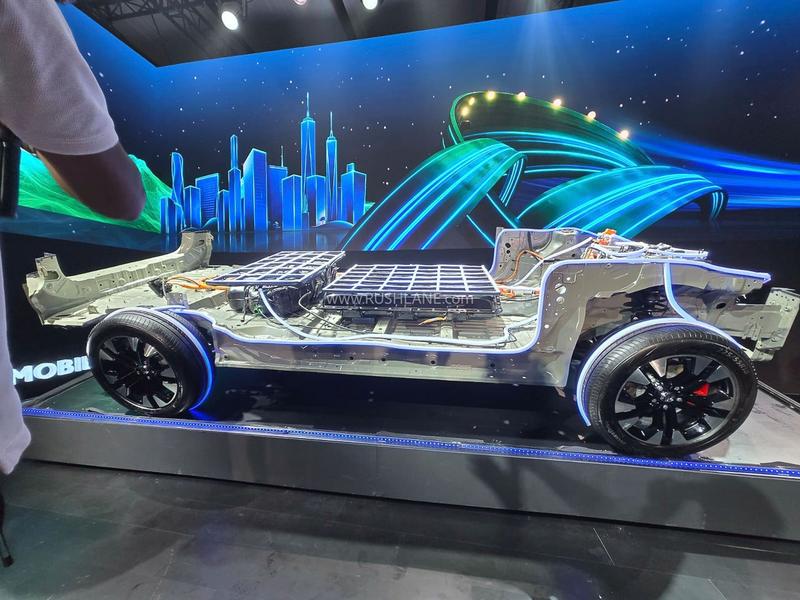
EV and PHEV models confirmed
The announcement explicitly confirms that battery electric vehicles and plug-in hybrid models are in development. This dual strategy is telling. While pure EVs dominate headlines, PHEVs occupy a middle ground that appeals to buyers anxious about charging infrastructure or long-distance capability—a legitimate concern outside metro cities and Tier-1 towns in India.
Spy shots of Starlight-based prototypes—both hybrid and electric variants—have already circulated online, suggesting that concrete products are further along in development than a platform announcement alone would imply. The Starlight nameplate itself hints at an upcoming compact SUV or crossover positioned below the existing MG Astor in the portfolio.
Timing and competitive context
The reveal arrives as the Indian EV market enters a more mature phase. Tata’s EV lineup (Nexon EV, Tigor EV, Punch EV) has established strong volume benchmarks. Mahindra’s XUV400 and upcoming XUV.e8 are raising the bar on range and features. Hyundai’s Ioniq 5 and Kia’s EV9 are bringing premium global standards. In this crowded field, a modular platform isn’t a luxury—it’s a necessity for sustained competitiveness.
JSW MG Motor’s entry into the JSW Group ownership structure (completed in 2023) also provides deeper pockets for capital-intensive platform development. The ADAPT announcement signals confidence that the partnership is translating into tangible product action.
What buyers should expect
A modular platform typically delivers benefits in three areas. First, pricing: shared components across models reduce costs, which can translate to lower on-road prices or better feature parity at a given price point. Second, choice: buyers will see more powertrain options (pure EV, PHEV, hybrid) within the same body style, addressing different use cases. Third, faster updates: platform-based design allows quicker iteration on features, infotainment, and safety tech without waiting for an all-new generation.
For the Indian market, this matters most in the ₹12–20 lakh segment, where volume concentration is highest and buyers are increasingly open to electrified powertrains if the total cost of ownership stacks up.
The broader strategic picture
This platform move also reflects global automotive trends. Automakers worldwide are consolidating architectures to manage the complexity of transitioning from internal combustion to electrified powertrains simultaneously. By designing ADAPT to support multiple drivetrain types, JSW MG Motor is hedging against uncertainty in India’s EV adoption curve—a smart move given that diesel and petrol vehicles will dominate new car sales for at least another five to seven years.
The company’s track record with platform-sharing is mixed. The MG Astor and MG ZS EV, for instance, share some underpinnings but are distinct products. ADAPT, being purpose-built for flexibility, should enable tighter integration and faster development cycles than previous approaches.
The bottom line
JSW MG Motor’s ADAPT platform announcement is a credible statement of intent, not merely a PR exercise. The confirmation of both EV and PHEV products, backed by visible spy shots and a JSW Group ownership structure with capital, suggests these aren’t vaporware promises. For Indian buyers, this means a broader choice of electrified vehicles at competitive prices within the next 18–24 months. For the company, it’s a necessary infrastructure investment to compete with Tata’s volume advantage and Mahindra’s technical depth. Whether ADAPT delivers on its modular promise—and whether the resulting products resonate with buyers—remains to be seen. But the platform itself is a smart bet on India’s automotive future.
| Aspect | JSW MG Motor ADAPT | Comparable Approach |
|---|---|---|
| Powertrain flexibility | EV, PHEV, Hybrid, Range-extender | Volkswagen MEB (EV-focused), Geely SEA (multi-powertrain) |
| Market focus | India-first design | Global platforms adapted for India |
| Expected launch window | 2024–2025 (first models) | Tata, Mahindra already shipping EV platforms |
| Price positioning | ₹12–20 lakh (estimated) | Nexon EV (₹14–18 lakh), XUV400 (₹15–20 lakh) |
Frequently asked questions
What does ADAPT stand for?
ADAPT is Advance Drive Architecture Platform Technology—JSW MG Motor’s modular platform designed to support battery electric vehicles, plug-in hybrids, conventional hybrids, and range-extender models on the same basic chassis architecture.
When will the first ADAPT-based models launch?
No official launch date has been announced, but spy shots of Starlight-based prototypes suggest that the first models could arrive within the next 18–24 months, likely in 2024–2025.
How does ADAPT compare to platforms used by Tata and Mahindra?
Tata’s Ziptron and Mahindra’s INGLO are primarily EV-focused platforms. ADAPT’s advantage is multi-powertrain flexibility—it supports EVs, PHEVs, and hybrids on one architecture, giving JSW MG Motor faster time-to-market across multiple powertrain options.