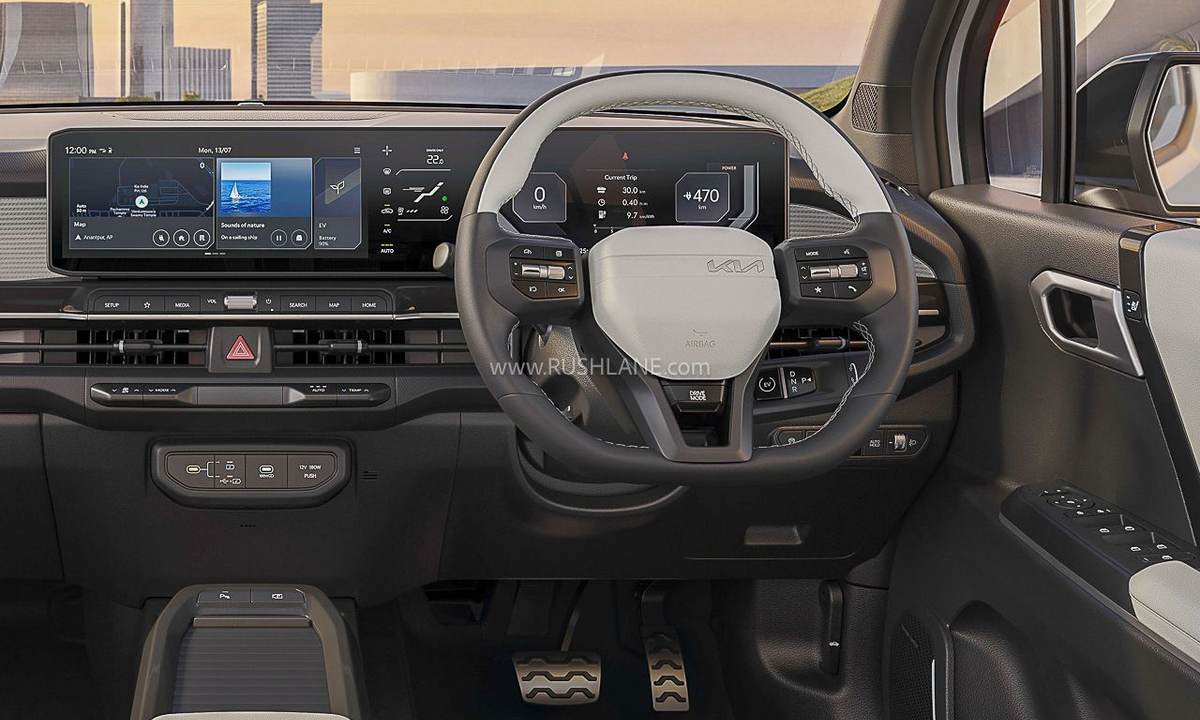
Kia has thrown open bookings for its new electric SUV, the Syros EV, marking another significant push into India’s rapidly expanding EV segment. The three-row compact SUV arrives with dual battery configurations, a claimed range stretching to 526 km, and a lifetime warranty on its battery pack—a competitive move that underscores Kia’s confidence in the product and its attempt to address range anxiety among Indian buyers.
Kia Syros EV: Battery and range breakdown
The Syros EV comes with two battery options. The larger pack delivers that headline 526 km of certified range on a single charge, while a smaller variant caters to buyers prioritising affordability over outright distance per charge cycle. Both options support DC fast charging, a practical feature for long-distance travel on India’s expanding EV charging network.
The battery comes with a lifetime warranty—a rarity in the Indian market where most competitors cap warranty periods to 8 or 10 years. This move signals Kia’s willingness to stand behind battery durability and may influence purchase decisions among first-time EV buyers hesitant about long-term ownership costs.
Pricing, variants, and the BaaS angle
Kia is offering the Syros EV across seven distinct trims, providing flexibility across price bands. Exact on-road pricing hasn’t been announced yet, but the multi-tier approach suggests the company is targeting both mass-market and premium segments within the compact SUV category.
Notably, Kia is offering a Battery-as-a-Service (BaaS) model for certain variants. Under this arrangement, buyers can purchase the vehicle without the battery pack and lease the battery separately—a strategy that lowers the upfront cost and addresses the depreciation anxiety many feel around EV battery packs. This model has gained traction globally and represents a shift in how manufacturers are selling electrified vehicles in price-sensitive markets.
Technology and features on the Kia Syros EV
The Syros EV arrives equipped with Level 2 Advanced Driver Assistance Systems (ADAS), a suite that includes adaptive cruise control, lane-keeping assist, and automatic emergency braking. For a compact SUV in this segment, ADAS integration is becoming table stakes rather than a luxury, and Kia’s inclusion here keeps pace with rivals like the Mahindra XUV400 and upcoming electric alternatives.
Connected car features round out the tech package. Buyers can expect smartphone integration, remote climate control, and over-the-air (OTA) software updates—features that justify the premium over conventional petrol or diesel three-row SUVs at similar price points.
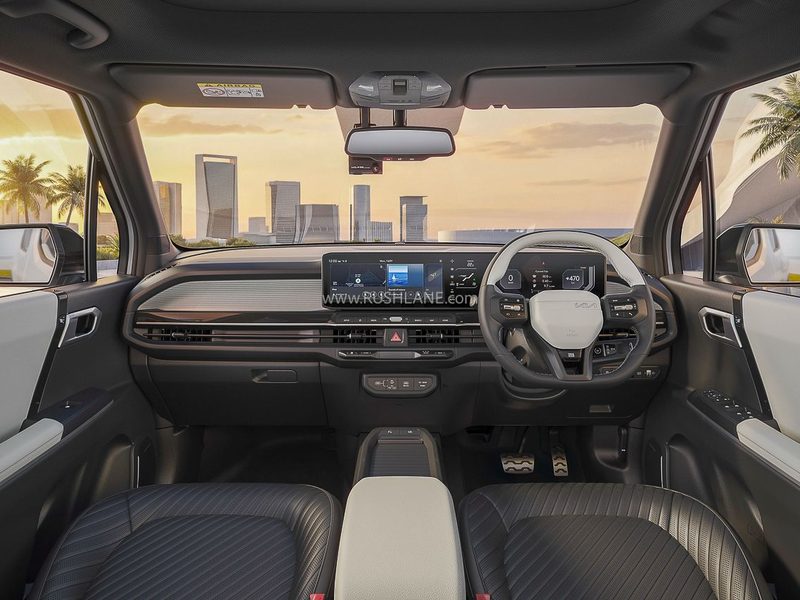
The cabin offers multiple colour and trim options, allowing customisation without the lengthy wait periods that plagued some Kia launches in the past. This flexibility is a deliberate nod to Indian buyer preferences for personalisation.
Where the Syros EV fits in the market
The Syros EV enters a segment that’s heating up. The Mahindra XUV400 has already established itself as a credible electric compact SUV, while the upcoming Tata Nexon EV and Hyundai Creta Electric are looming threats. The Syros EV’s three-row seating and the 526 km range claim give it a differentiated positioning—most compact electric SUVs in India max out at five seats.
However, range claims and real-world efficiency can diverge significantly. The 526 km figure is certified, but Indian driving conditions—traffic congestion, heat, and varied road surfaces—typically reduce claimed range by 15-20 percent. Buyers should budget for realistic usable range of around 420-450 km in mixed driving.
The bigger picture: Why this launch matters
Kia’s entry into the three-row electric SUV space signals that manufacturers are no longer treating EVs as niche products for metro cities. The Syros EV’s feature set and BaaS option indicate a company betting on volume and mainstream adoption rather than premium positioning alone. The lifetime battery warranty is a reassurance play—tacit acknowledgment that warranty anxiety remains a barrier for EV adoption in India.
The question isn’t whether the Syros EV is technically capable; it clearly is. The real test lies in pricing. If Kia can position this competitively against petrol-powered rivals while undercutting other electric three-row SUVs, it could capture meaningful market share. If pricing drifts toward premium levels, it risks cannibalising sales from its own petrol Syros and losing price-conscious buyers to cheaper alternatives.
What we make of it
The Syros EV represents Kia’s serious commitment to India’s EV transition, not just a token gesture. The lifetime battery warranty and BaaS flexibility show the company understands Indian buyer concerns. However, the real measure of success will be delivery timelines and post-purchase service experience. Kia’s dealer network in Tier-2 towns remains patchy, and EV servicing expertise isn’t uniform across all outlets. If the company can scale service infrastructure alongside sales, the Syros EV could become a genuine game-changer. If it stumbles on execution, it’ll be another well-intentioned launch that underperforms.
Frequently asked questions
What is the maximum range of the Kia Syros EV?
The Kia Syros EV offers a certified range of up to 526 km on its larger battery pack. Real-world range in Indian driving conditions is likely 15-20% lower, translating to roughly 420-450 km depending on driving style and traffic conditions.
Does the Kia Syros EV support fast charging?
Yes, both battery variants of the Kia Syros EV support DC fast charging, enabling quicker top-ups during long journeys. Charging times vary based on charger capacity and battery size.
What is Battery-as-a-Service (BaaS) and how does it work for the Syros EV?
BaaS allows you to buy the vehicle without the battery pack and lease the battery separately. This lowers upfront purchase cost and transfers battery degradation risk to Kia, making ownership more affordable for price-conscious buyers.