
Kia has officially announced the Kia Syros EV launch in India, marking the company’s second homegrown electric vehicle and a direct play for buyers hunting affordable EVs in the compact SUV space. Pricing starts at ₹13.49 lakh ex-showroom for the base 42 kWh variant, with the larger battery pushing the range to 526 km on a single charge. Deliveries kick off on July 30.
Kia Syros EV launch: Two battery options, one clear target
The Kia Syros EV launch arrives with a two-pronged battery strategy. The entry-level 42 kWh pack sits at ₹13.49 lakh, while the 51.1 kWh variant (the one promising that 526 km ARAI-claimed range) commands a higher price point. For context, that starting figure positions the Syros EV well below the Tata Nexon EV3’s ₹17.49 lakh entry, making it genuinely accessible to first-time EV buyers in Tier-1 metros and ambitious Tier-2 towns.
The range claim matters here. Five hundred-plus kilometres on a single charge removes the range anxiety that still haunts many Indians considering their first electric car. Whether you’re doing daily 60 km commutes or planning occasional weekend trips, the larger battery variant covers both scenarios without constant charging anxiety.
What Kia’s bringing to the table
Beyond the headline numbers, Kia is bundling ownership benefits that feel genuinely thought-out rather than marketing fluff. The company is positioning industry-first perks alongside the vehicle itself—though the exact nature of these benefits (extended warranty, free charging credits, service packages) wasn’t detailed in the launch announcement. Expect clarity on these once the sales team gets rolling.
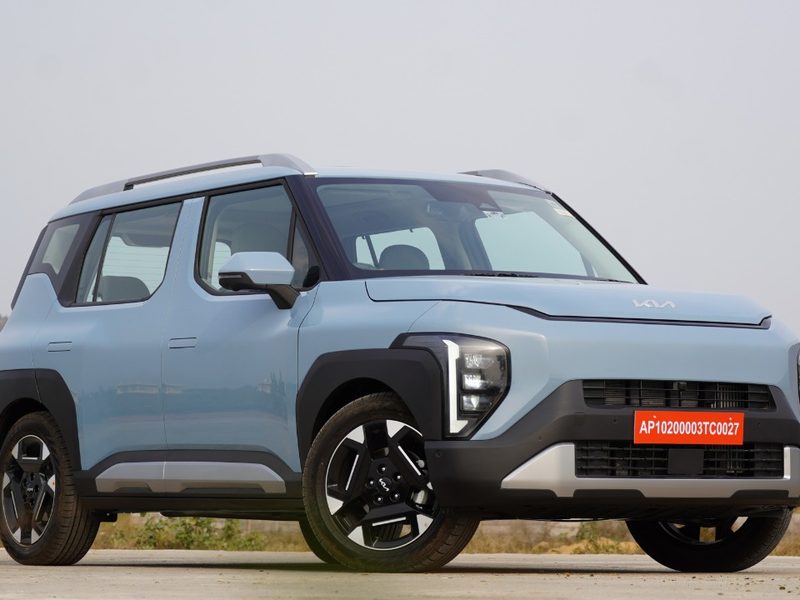
The Syros EV itself carries over the design language from its petrol sibling—that upright stance, the boxy proportions—but adds the usual EV tweaks: a closed-off grille, unique alloy wheels, and EV badging. Inside, expect the same dashboard layout as the regular Syros, which means an 8-inch touchscreen, a digital instrument cluster, and decent cabin space for a compact SUV.
Rivals and the competitive picture
Pricing is where this gets interesting. At ₹13.49 lakh, the Syros EV sits comfortably between the Tata Nexon EV (₹14.73 lakh for the base 40 kWh variant) and the MG Comet EV (₹9.99 lakh entry, though that’s a micro-EV). It’s also significantly cheaper than the Hyundai Kona Electric, which starts around ₹23.73 lakh.
The real competition, though, comes from Tata’s Nexon EV3. Both are compact SUV EVs, both promise solid range, and both are priced for the mainstream buyer. The Nexon EV3 starts ₹4 lakh higher but brings a slightly larger footprint and Tata’s established EV service network. The Syros EV, meanwhile, undercuts it and comes with whatever Kia’s bundling as ownership benefits. For buyers who haven’t made up their minds, this price gap could be the deciding factor.
| Model | Starting Price (ex-showroom) | Battery Options | Max Range (ARAI) |
|---|---|---|---|
| Kia Syros EV | ₹13.49 lakh | 42 kWh, 51.1 kWh | 526 km |
| Tata Nexon EV3 | ₹17.49 lakh | 40 kWh, 55 kWh | 537 km |
| Hyundai Kona Electric | ₹23.73 lakh | 39.2 kWh, 55.2 kWh | 452 km |
| MG Comet EV | ₹9.99 lakh | 38 kWh, 52 kWh | 460 km |
What you’re actually getting for the money
Kia’s positioning the Syros EV as a practical family hauler, not a performance machine. Don’t expect neck-snapping acceleration or sporty handling. What you do get is a spacious cabin (the Syros platform is roomy for its footprint), decent boot space, and the quiet, smooth driving experience that comes standard with electric powertrains. For someone doing regular city runs and occasional highway trips, that’s plenty.
Charging infrastructure remains the elephant in the room. Kia hasn’t announced home charging support or partnerships with public networks, which is a gap worth watching. The Nexon EV3 comes with a home charger as standard; we’ll need to see if Syros EV buyers get the same courtesy.
The waiting period question
With deliveries starting July 30, early adopters will get their cars within weeks. Whether waiting periods stretch out depends entirely on demand. Kia’s first EV, the Niro EV, faced modest waiting times despite strong initial bookings. The Syros EV’s lower price point and wider appeal could either accelerate sales or attract the kind of volume that keeps waiting lists manageable. We’ll know more once booking numbers start flowing in.
The bottom line
The Kia Syros EV launch is a solid entry into the affordable EV segment, and that ₹13.49 lakh starting price is genuinely competitive. It’s not the most exciting vehicle on paper—the design is conservative, the powertrain specs are standard—but it doesn’t need to be. For a first-time EV buyer who wants 500+ km range, decent space, and a price that doesn’t require financing gymnastics, the Syros EV deserves serious consideration. The real test will be whether Kia’s after-sales network and ownership benefits can match the value proposition on paper. Reserve final judgement until we’ve spent time behind the wheel and talked to early buyers about their experience.
Frequently asked questions
What is the starting price of the Kia Syros EV?
The Kia Syros EV launch begins at ₹13.49 lakh ex-showroom for the 42 kWh battery variant. The larger 51.1 kWh battery costs more but delivers the claimed 526 km range.
How does the Syros EV compare to the Tata Nexon EV3?
The Syros EV undercuts the Nexon EV3 by approximately ₹4 lakh at the entry level, though the Nexon offers a slightly larger footprint and an established EV service network. Both deliver 500+ km range on their top variants.
When will deliveries of the Kia Syros EV begin?
Kia announced that Syros EV deliveries will commence on July 30, 2024, for early customers who book the vehicle.