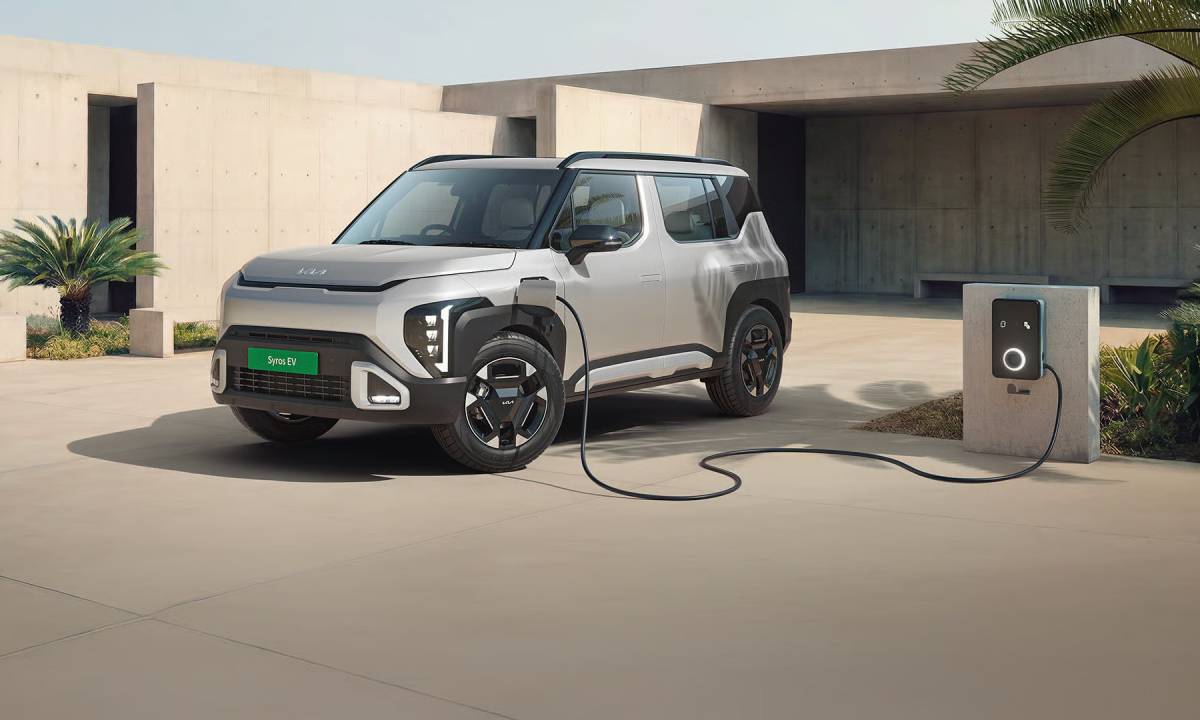
Kia has officially launched its second mainstream electric vehicle in India, the Syros EV, positioning it as the brand’s most affordable battery-powered offering to date. The compact electric SUV arrives with an unusually comprehensive lineup: seven distinct variants spread across two battery pack options, a triple-screen dashboard setup, and Level 2 advanced driver assistance systems—a feature rarely seen at this price point in the Indian market.
Kia Syros EV: Battery options and claimed range
The Syros EV arrives with two battery configurations. The smaller pack delivers a claimed 489 km of range on a single charge, while the larger battery option extends this further, though Kia has not yet disclosed the exact WLTP figure for the higher-capacity variant. Both versions use lithium-ion chemistry and support vehicle-to-load (V2L) functionality, allowing owners to power external devices directly from the car—a practical addition for Indian buyers who frequently travel to areas with unreliable grid access.
Charging speeds have not been formally announced, but the presence of V2L suggests DC fast-charging capability. Real-world range will vary significantly based on driving patterns, ambient temperature, and terrain—buyers in metro cities with predictable commutes will likely see figures closer to the claimed numbers, while highway driving and hilly regions will demand more frequent charging stops.
Seven variants and feature breakdown
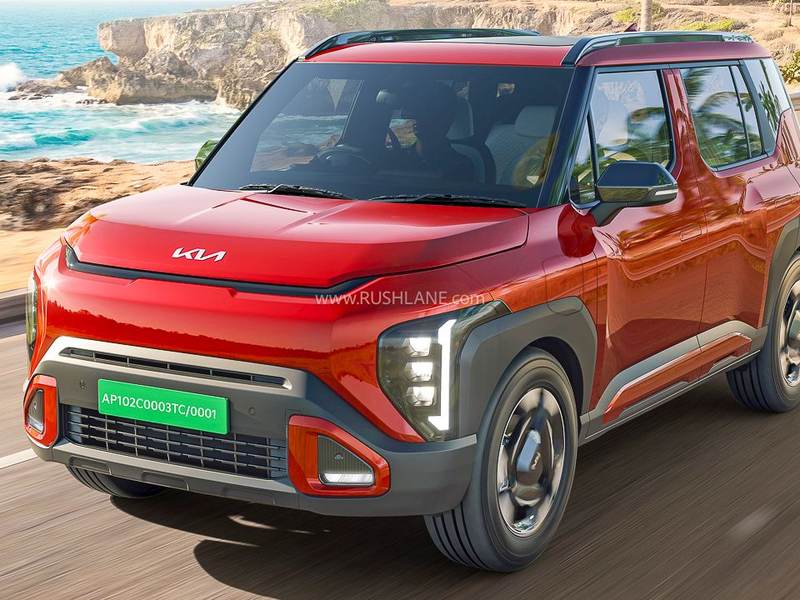
The Syros EV’s seven-variant architecture is unusually granular for an affordable EV. This segmentation allows Kia to capture buyers at different price points without forcing them to pay for features they don’t need. Base variants likely strip down to essentials—power steering, basic infotainment, manual climate control—while mid-tier trims add convenience features like cruise control, rear parking sensors, and smartphone integration.
The standout feature across the range is the triple-screen dashboard. This setup typically includes a digital instrument cluster, a central touchscreen infotainment system (likely 8-10 inches), and a driver-side display. For a car positioned as affordable, this is ambitious; most rivals in this segment still rely on dual screens or single large units.
Level 2 ADAS is another headline-grabbing inclusion. This autonomous driving assistance package usually covers adaptive cruise control, lane-keeping assist, automatic emergency braking, and lane departure warning. In the compact EV space, ADAS typically remains confined to premium variants; Kia’s decision to offer it across multiple trims—or at least mid-range and above—undercuts rivals like the Tata Nexon EV and MG ZS EV on safety credentials.
Interior and practicality
Compact electric SUVs live or die by interior space. The Syros EV’s dimensions have not been officially confirmed, but the “compact” classification suggests a length around 4.3 metres, placing it in the same ballpark as the Nexon EV and ZS EV. Kerb weight will be critical; electric powertrains add 200-300 kg compared to petrol equivalents, which affects handling and efficiency. Kia will need to manage this carefully to keep the claimed range realistic.
Boot space figures remain undisclosed, but the boxy SUV shape should translate to practical cargo capacity—a key consideration for families and delivery professionals who form a growing portion of EV buyers in India. The triple-screen setup, while impressive, will occupy significant dashboard real estate; Kia must ensure this doesn’t compromise storage cubbies or cup holders.
Rivals and market positioning
The Kia Syros EV enters a heating compact EV segment. The Tata Nexon EV remains the volume leader, with a loyal customer base and extensive charging network support through Tata’s partnerships. The MG ZS EV offers aggressive pricing and a larger screen setup. Hyundai’s Kona Electric targets a slightly premium segment. The BYD Atto 3 (Yuan Plus) recently launched at a higher price point.
Where the Syros EV differentiates is breadth of variants and early ADAS availability. If Kia’s pricing undercuts the Nexon EV on entry variants while matching or exceeding range, it could capture price-conscious buyers. The Level 2 ADAS angle appeals to safety-conscious affluent buyers who might otherwise consider the Nexon EV Plus or ZS EV Max. The V2L feature, while niche, signals premium thinking at a mass-market price.
The real battle will be on-road pricing. Kia’s ex-showroom quotes matter less than what buyers actually pay after on-road charges, registration, and insurance. If the Syros EV lands within ₹2-3 lakh of comparable Nexon EV variants, it has a genuine shot at market share. If pricing creeps higher, the brand loyalty and charging ecosystem advantage of Tata becomes harder to overcome.
What this means for buyers
The Kia Syros EV represents a calculated bet on feature-led differentiation rather than price undercutting. Kia is betting that Indian buyers will pay a premium for ADAS, V2L, and a richer interior experience—assumptions that worked for the Seltos petrol lineup but remain untested in the EV segment. The seven-variant strategy also suggests Kia is hedging: if premium trims flop, volume can shift to base and mid-range models.
For buyers, this is positive news. More variants mean more flexibility to spec exactly what you need. ADAS at affordable prices raises the safety bar across the segment. However, the real test is reliability and after-sales support. Kia’s service network in Tier-2 towns remains thinner than Tata’s, which could be a dealbreaker for rural and semi-urban buyers. Metro city customers will find Kia’s dealer density adequate.
The bigger story is that India’s EV market is maturing beyond basic transport into lifestyle and tech-forward territory. The Syros EV’s feature set wouldn’t have been possible three years ago; now it’s almost expected. This acceleration benefits consumers but pressures smaller brands to innovate faster or exit.
| Aspect | Kia Syros EV | Tata Nexon EV | MG ZS EV |
|---|---|---|---|
| Variants | 7 | 5 | 4 |
| Battery options | 2 | 2 | 2 |
| Claimed range (max) | 489 km | 489 km | 500+ km |
| Level 2 ADAS | Yes | Limited | No |
| V2L support | Yes | No | No |
| Screens | Triple | Dual | Dual |
The bottom line
The Kia Syros EV is a competent entry into India’s compact electric SUV market, but it’s not a game-changer—and that’s fine. It’s a solid alternative that brings fresh thinking on features and variants at a time when the segment risks becoming commoditised. Whether it captures meaningful sales depends entirely on pricing and Kia’s ability to service and support buyers beyond metro cities. If both align, expect the Syros EV to carve out a respectable 15-20% share of the compact EV pie. If not, it becomes a niche choice for tech-savvy buyers in major cities—profitable but not transformative.
Frequently asked questions
What is the claimed range of the Kia Syros EV?
The smaller battery pack delivers 489 km of claimed range on a single charge. The larger battery option extends range further, though exact figures have not been disclosed. Real-world range will vary based on driving style, temperature, and terrain.
Does the Kia Syros EV have ADAS and other safety features?
Yes, the Syros EV comes with Level 2 advanced driver assistance systems across multiple variants, a rare feature at this price point. This typically includes adaptive cruise control, lane-keeping assist, automatic emergency braking, and lane departure warning.
How many variants does the Kia Syros EV have?
The Syros EV is available in seven distinct variants across two battery pack options, giving buyers significant flexibility to choose features and pricing that suit their needs. This granular lineup is unusually comprehensive for an affordable electric SUV.