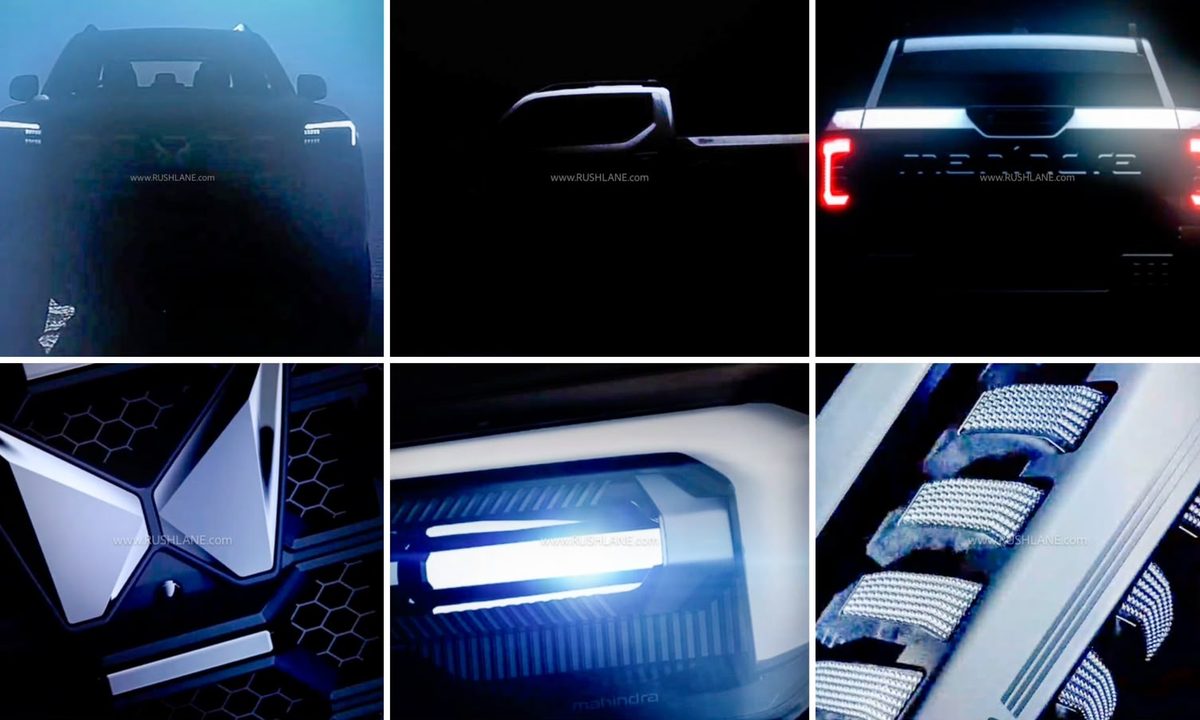
Mahindra is doubling down on its Independence Day showcase. The carmaker has just released a teaser for the all-new Mahindra Scorpio Pikup, which will make its official debut on August 14 alongside the BE 6 Sporteq. This isn’t a surprise left-field entry—it’s the production version of the Scorpio N-based pickup truck that’s been in development, and it’s coming to take on Toyota’s Hilux and Isuzu’s V Cross in India’s growing premium pickup segment.
What the teaser reveals
The first images of the Mahindra Scorpio Pikup show a truck that doesn’t shy away from the Scorpio N’s design language. Up front, you’re looking at LED headlights that appear to use a modern multi-element setup—a step above what you’d find in the standard Scorpio. The teaser also hints at a panoramic sunroof, which is an unusual but welcome addition for a working pickup. This isn’t going to be a bare-bones workhorse; Mahindra is clearly positioning this as a lifestyle vehicle that can haul cargo.
The overall stance looks purposeful. There’s a proper truck bed at the rear, and the body-on-frame construction typical of the Scorpio N carries through. The cabin glimpses suggest a modern interior, likely sharing the Scorpio N’s dashboard architecture with climate control and infotainment systems that go beyond what rivals currently offer in this price band.
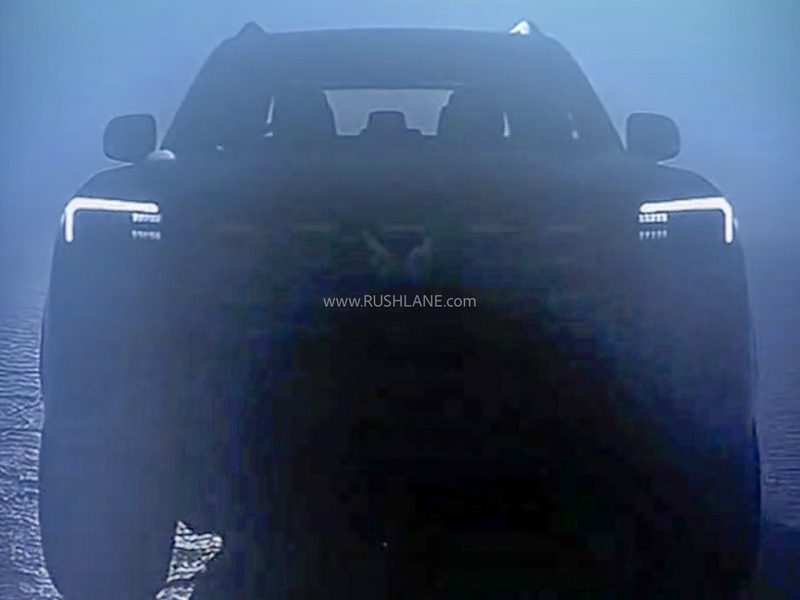
Mahindra Scorpio Pikup positioning and rivals
This is where things get interesting. The pickup truck segment in India has been dormant for years, with Toyota Hilux and Isuzu V Cross serving niche buyers—mostly businesses, farms, and adventurers. Prices for these imports sit north of ₹25 lakh, and they’re not exactly user-friendly when it comes to service networks in smaller towns.
By launching the Mahindra Scorpio Pikup, the company is betting that a domestically engineered pickup based on a proven SUV platform can undercut the imports while offering better after-sales support across India’s tier-2 and tier-3 towns. The Scorpio N already has strong brand recognition and a solid service footprint. A pickup variant leverages that equity without requiring a ground-up design investment.
Expect the Scorpio Pikup to land somewhere between ₹18 and ₹22 lakh (ex-showroom estimate), making it significantly cheaper than Hilux while offering comparable capability. That price window also keeps it distinct from the Bolero Pik-Up, Mahindra’s existing utilitarian pickup, which targets a different buyer altogether.
Why August 14 matters
Mahindra’s choice to debut both the BE 6 Sporteq and the Scorpio Pikup on Independence Day is deliberate. The electric SUV caters to urban, tech-forward buyers. The pickup addresses rural and semi-urban demand—a two-pronged strategy that covers the breadth of the Indian market. It’s a statement: we’re not just chasing EV trends; we’re also solving real transportation needs.
The timing also avoids clashing with the festive season launches from rivals. By getting both vehicles into showrooms by mid-August, Mahindra can start building waiting lists before the Diwali rush and capitalize on year-end buying momentum.
What buyers should expect
The Mahindra Scorpio Pikup will almost certainly use the Scorpio N’s 2.0-litre diesel engine, which produces 160 PS and 385 Nm. That’s adequate for a light-duty pickup. A petrol option is possible but less likely given the segment’s preference for diesel efficiency. Transmission options will probably include a 6-speed manual and a 6-speed automatic, mirroring the Scorpio N lineup.
Ground clearance, approach/departure angles, and payload capacity will be crucial differentiators. Mahindra has to prove the truck can genuinely work—not just look good. The panoramic sunroof and LED lights are nice-to-haves, but a farmer in Maharashtra cares more about towing capacity and durability.
One thing to watch: will Mahindra offer a crew-cab variant (with a rear bench seat for passengers) alongside a single-cab workhorse? The teaser doesn’t clarify this, but it matters hugely for the addressable market.
The bigger picture
India’s pickup truck market has been underserved for a decade. The Scorpio Pikup could unlock latent demand from small business owners, agricultural entrepreneurs, and even urban buyers who want a capable weekend adventure vehicle. If Mahindra prices it aggressively and backs it with a solid warranty and service promise, it could actually move volumes—something the Hilux and V Cross haven’t managed at scale in India.
That said, execution matters. The teaser looks promising, but we’ll reserve final judgment until August 14, when Mahindra pulls the wraps off. Specifications, pricing, variant options, and warranty terms will determine whether this is a genuine game-changer or a niche curiosity.
The bottom line
The Mahindra Scorpio Pikup fills a gap that’s been empty for too long. It’s not revolutionary—it’s a logical extension of the Scorpio N platform into a segment with proven demand. What makes it newsworthy is the price-to-capability ratio it could offer. If Mahindra nails the launch on August 14 and delivers a truck that’s genuinely cheaper and more accessible than Hilux while being more refined than the Bolero Pik-Up, it could reshape how India thinks about pickups. The real test comes after launch, when we see real-world reliability, resale values, and whether buyers actually line up to buy it.
Frequently asked questions
When will the Mahindra Scorpio Pikup launch?
The Mahindra Scorpio Pikup will make its official debut on August 14, 2024, alongside the BE 6 Sporteq electric SUV.
What engine will the Scorpio Pikup use?
The Scorpio Pikup is expected to use the Scorpio N’s 2.0-litre diesel engine producing 160 PS and 385 Nm of torque, with manual and automatic transmission options.
How will the Scorpio Pikup compare to Toyota Hilux and Isuzu V Cross?
The Scorpio Pikup is expected to undercut both rivals significantly on price while offering better service network access across India. It will compete on capability, features like LED lights and sunroof, and affordability rather than premium positioning.