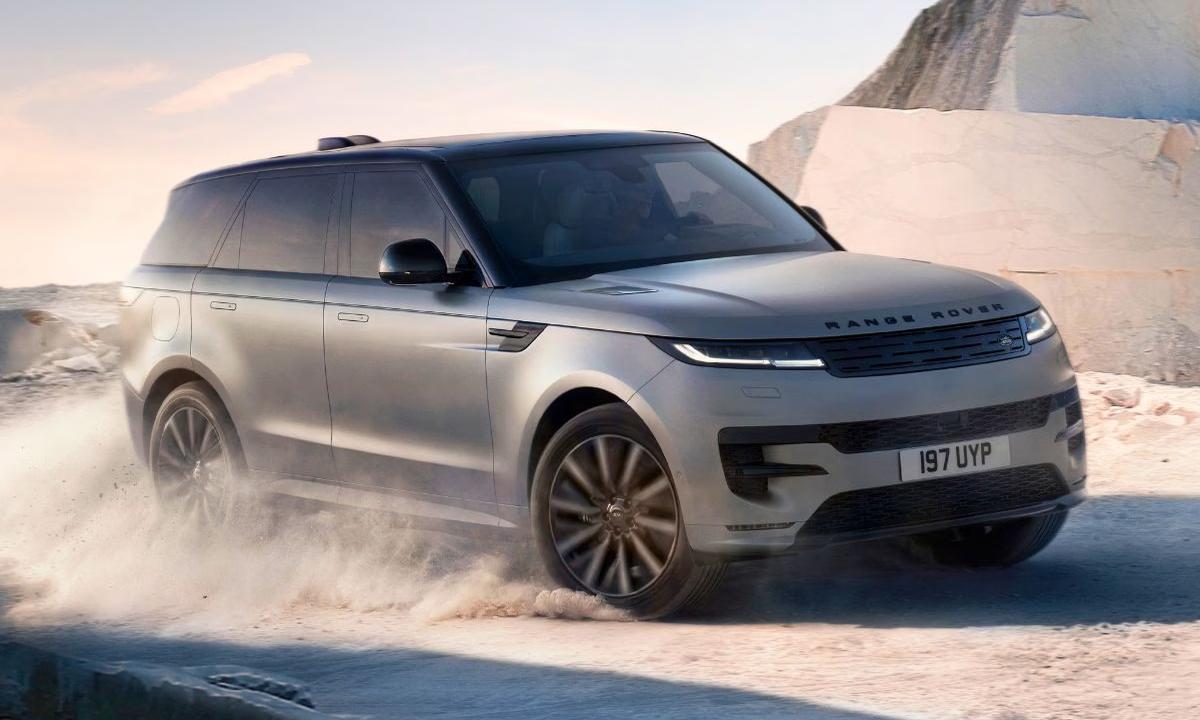
Jaguar Land Rover has officially unveiled the Range Rover Sport Electric and thrown open the booking doors in India. This marks a significant moment for the British luxury marque—the second pillar of its electrification strategy after the flagship Range Rover went all-electric.
The new battery-powered Range Rover Sport is no soft reboot. It arrives with dual electric motors pushing out 550 PS, all-wheel drive as standard, and a claimed WLTP range stretching to 609 km on a single charge. That’s the kind of real-world distance figure that matters when you’re spending premium money on an SUV.
What powers the Range Rover Sport Electric
At the heart sits a 118.5 kWh battery pack paired with an 800V electrical architecture. That 800V setup isn’t just a spec sheet number—it allows for faster charging cycles and better thermal management, which translates to quicker top-ups during long drives. The dual-motor setup delivers power to all four wheels, giving the Range Rover Sport Electric the traction and capability credentials the nameplate has always promised.
The 609 km WLTP range puts it comfortably ahead of most competitors in the global luxury EV space. For Indian buyers doing regular Delhi-to-Jaipur runs or Mumbai-to-Pune commutes, this is genuinely useful. Real-world range will vary with driving patterns and weather, but even with a 15-20% buffer, you’re looking at over 480 km of usable distance.
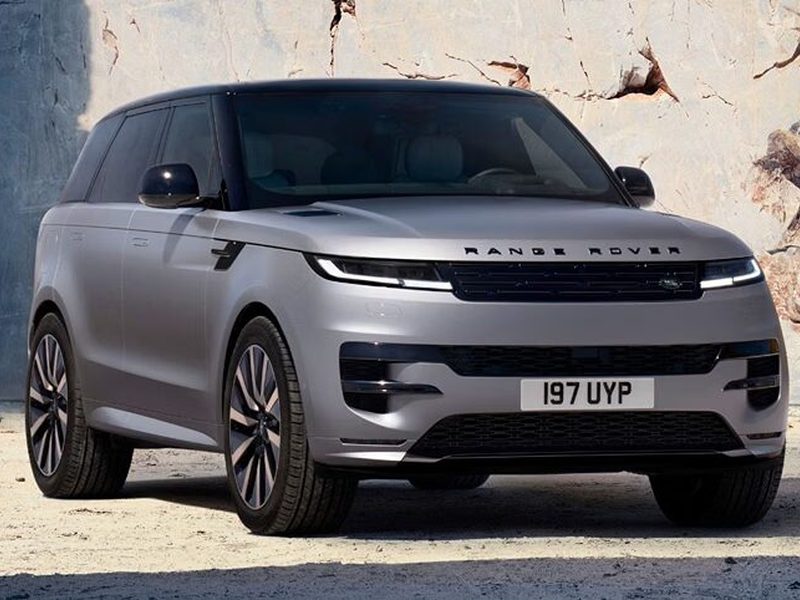
Range Rover Sport Electric: Design and positioning
Visually, the Range Rover Sport Electric retains the muscular stance that made the nameplate recognizable. JLR has resisted the urge to make it look like a futuristic concept—instead, it reads as a natural evolution. The electric powertrain allows for a lower centre of gravity, which should improve handling dynamics compared to the traditional petrol and diesel variants.
This positioning matters. The Range Rover Sport has always been the more driver-focused member of the Range Rover family. Adding electric performance—instant torque delivery, refined acceleration—actually enhances that character rather than diluting it.
India bookings and what comes next
JLR has opened bookings for the Range Rover Sport Electric in India, though the company hasn’t yet announced the ex-showroom price. Given that the standard Range Rover (petrol/diesel) sits in the ₹2.3–3 crore bracket in India, expect the electric variant to command a premium. Likely on-road pricing in metros could touch ₹3.5–4+ crore, positioning it firmly in the ultra-luxury segment where it’ll compete with the Mercedes-Maybach EQS SUV and the BMW iX M60.
Waiting periods and delivery timelines haven’t been confirmed yet. JLR’s service network in India is concentrated in major cities, so early adopters will primarily be metro-based buyers with access to reliable charging infrastructure and authorized service centres.
How it stacks against rivals
The Range Rover Sport Electric enters a compact but growing segment. The Mercedes-Maybach EQS SUV offers similar luxury positioning but with a more tech-forward interior. The BMW iX M60 delivers comparable performance but leans heavier on autonomous driving tech. The Porsche Cayenne Electric (expected soon globally) will be another reference point.
Where the Range Rover Sport Electric has an edge: heritage and capability. Land Rover’s off-road DNA is baked into the brand. Even if most buyers never venture beyond city roads, that lineage carries emotional weight. The 609 km range also undercuts most direct rivals by 50–100 km, which is tangible in the real world.
The real story here
This isn’t just another luxury SUV going electric. It’s JLR signalling that electrification won’t mean abandoning what made Range Rover special—performance, capability, and uncompromising build quality. The 550 PS output and dual-motor setup suggest this won’t be a compromise performance-wise. And the 800V architecture hints at charging speeds competitive with the best in class.
For India, the timing is interesting. Luxury EV adoption is still niche—we’re talking a few hundred units annually across all premium brands. But as charging networks improve and battery costs stabilize, the Range Rover Sport Electric could catalyze a shift in how high-net-worth individuals think about SUVs. Why settle for a petrol Range Rover with its running costs and emissions when this offers comparable range, instant performance, and the prestige of owning a cutting-edge vehicle?
That said, this is still a ₹3.5+ crore proposition in a market where most buyers—even wealthy ones—think twice before crossing the ₹2 crore mark. JLR will need to make a compelling case on design, performance, and the intangibles that justify premium pricing. The 609 km range and 550 PS output are strong foundations. Whether it translates to meaningful sales in India will depend on how aggressively JLR prices it and how quickly the charging ecosystem catches up.
Frequently asked questions
What is the range of the Range Rover Sport Electric?
The Range Rover Sport Electric delivers a claimed WLTP range of 609 km on a single charge, powered by a 118.5 kWh battery pack. Real-world range will vary based on driving conditions, weather, and driving style.
How much power does the Range Rover Sport Electric produce?
The dual electric motors generate 550 PS of power with all-wheel drive as standard. The 800V electrical architecture enables faster charging and better thermal efficiency.
When will the Range Rover Sport Electric be available in India?
Bookings are now open in India, though JLR has not yet announced the ex-showroom price or delivery timeline. Pricing and delivery details are expected to follow in the coming weeks.