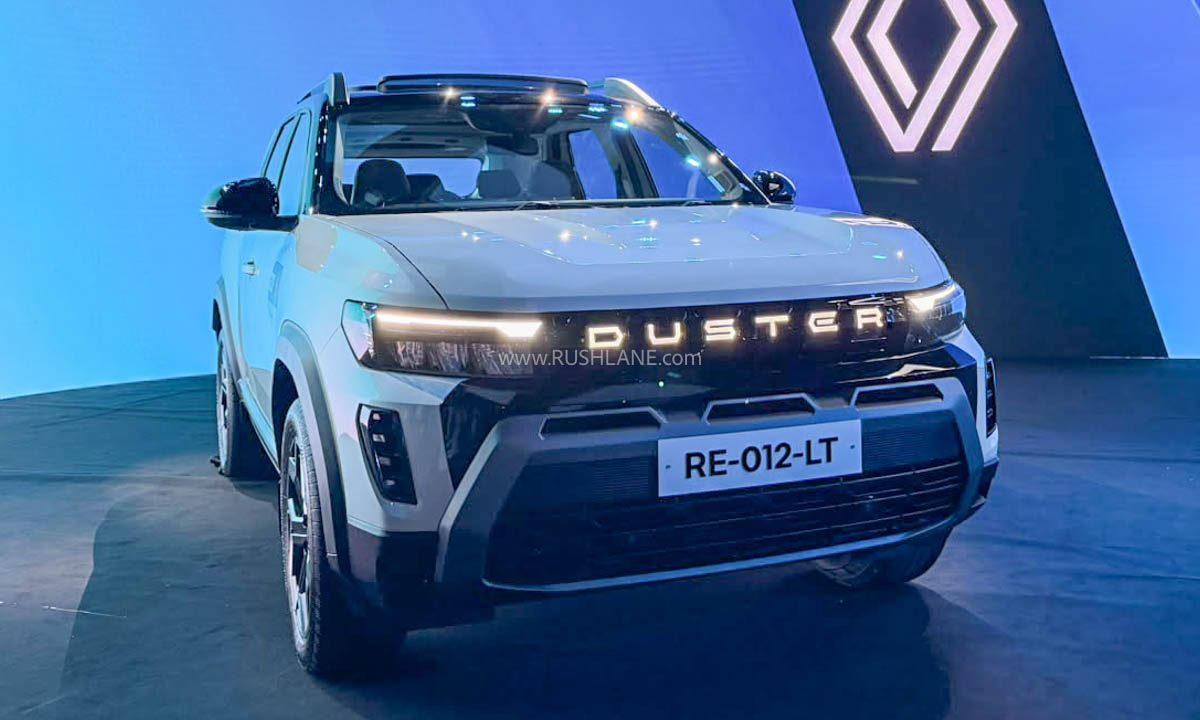
Renault has finally brought a strong hybrid option to the Duster, launching it at ₹16.99 lakh ex-showroom. This isn’t just a mild-hybrid tweak—it’s a proper dual-motor setup paired with a 1.8-litre petrol engine, and it claims to deliver 29 km/l. For a mid-size SUV segment where diesel popularity has cratered and petrol-only buyers are growing impatient with fuel costs, this Renault Duster Hybrid launch could shake things up.
Renault Duster Hybrid launch: What’s under the bonnet
The hybrid powertrain makes 157.8 hp and draws from a 1.4 kWh battery pack. Two electric motors work in tandem with the 1.8-litre petrol engine—one for assisting acceleration, another for regenerative braking. The gearbox offers 15 different combinations to optimise efficiency depending on driving conditions. It’s the kind of engineering detail most buyers won’t think about, but it’s what separates a genuine hybrid from a marketing stunt.
That claimed 29 km/l figure is substantial. For context, the current petrol Duster manages around 16-18 km/l in real-world driving, and even diesel variants hover near 19-20 km/l. If Renault’s numbers hold up, you’re looking at a 50% jump in efficiency—enough to justify the hybrid premium for anyone doing serious highway miles.
Pricing and variants
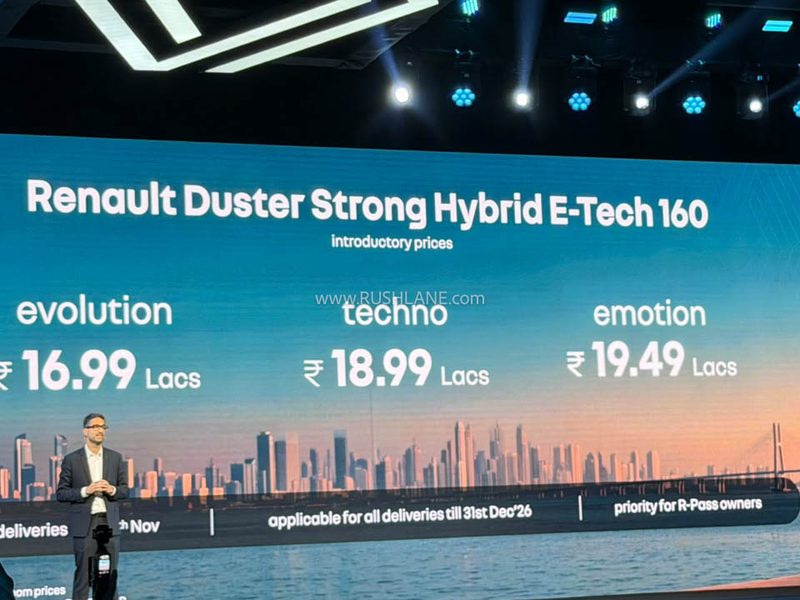
The Renault Duster Hybrid launch brings three trim levels: Evolution, Techno, and Emotion. All three are offered at introductory pricing, starting from ₹16.99 lakh. Renault hasn’t yet disclosed the variant-wise breakup or when these introductory rates expire, but expect the top Emotion to push closer to ₹19-20 lakh once the launch offers dry up.
Here’s the catch: there’s no word on whether a diesel option continues alongside this hybrid. If Renault has quietly killed the diesel Duster, that’s a significant strategic shift. The diesel crowd—particularly in Tier-2 cities and rural markets—still exists, and losing that option could limit appeal outside metro areas.
Battery warranty and service story
Renault is backing the hybrid system with an 8-year battery warranty. That’s reassuring for a market where EV and hybrid battery longevity remains a concern. Service infrastructure and spare parts availability for the hybrid system will be critical; Renault’s dealer network isn’t as dense as Maruti or Hyundai, so buyers should verify local support before signing cheques.
How it stacks against rivals
The Duster Hybrid’s closest rival is the Maruti Grand Vitara, which also offers a strong hybrid option starting around ₹10.45 lakh for petrol variants and ₹13.99 lakh for the hybrid. However, the Grand Vitara hybrid claims 23.23 km/l—lower than the Duster’s 29 km/l claim. The Hyundai Creta doesn’t yet have a hybrid, and the Kia Seltos hybrid starts at ₹16.99 lakh for the entry variant but is a different segment entirely (more sedan-like, less SUV ruggedness).
Tata Nexon petrol variants start at ₹7.99 lakh, but there’s no direct hybrid competitor in that price band yet. If you’re cross-shopping the Duster Hybrid against the Grand Vitara hybrid, the Duster’s claimed efficiency advantage and larger SUV proportions might sway you—but Maruti’s service network is far stronger.
| Model | Type | Starting Price | Claimed Mileage | Power (hp) |
|---|---|---|---|---|
| Renault Duster Hybrid | Strong Hybrid | ₹16.99 L | 29 km/l | 157.8 |
| Maruti Grand Vitara Hybrid | Strong Hybrid | ₹13.99 L | 23.23 km/l | 113 |
| Hyundai Creta Petrol | Petrol | ₹10.99 L | 16.8 km/l | 123 |
| Kia Seltos Hybrid | Hybrid | ₹16.99 L | 18.5 km/l | 159 |
Is it worth the wait?
If you’re someone doing 40,000+ km annually and fuel prices keep you up at night, the Renault Duster Hybrid launch makes genuine sense. That 29 km/l claim, if real, could save you ₹30,000-40,000 a year versus a petrol Duster. Over a five-year ownership cycle, the hybrid premium pays for itself.
But here’s the reality check: Renault’s waiting periods have historically been short compared to Maruti or Hyundai. That’s good news if you want the car soon, but it also suggests Renault isn’t expecting a stampede of bookings. The brand still struggles with resale value in India, and hybrid drivetrains—while increasingly common—can still spook used-car buyers in smaller towns.
The introductory pricing is a sweetener, but don’t expect it to last beyond the next quarter. Renault typically pulls such offers fast once initial momentum dies.
The bottom line
The Renault Duster Hybrid launch arrives at exactly the right moment. Petrol prices are climbing, diesel is becoming a harder sell, and buyers are hunting for efficiency without going full electric. A claimed 29 km/l from a 157.8 hp SUV with proper hybrid engineering—not some watered-down mild-hybrid—is genuinely noteworthy. The ₹16.99 lakh starting price is aggressive, and the 8-year battery warranty removes one major anxiety.
The real question is whether Renault can build momentum and sustain service quality. The Grand Vitara hybrid is cheaper and has Maruti’s dealer network behind it. But if you value efficiency, don’t mind a smaller service network, and want an SUV that feels more purposeful than a sedan-SUV, the Duster Hybrid deserves a test drive. Just verify local dealer support before you commit.
Frequently asked questions
What is the starting price of the Renault Duster Hybrid?
The Renault Duster Hybrid launch begins at ₹16.99 lakh ex-showroom for the Evolution trim. Techno and Emotion variants are priced higher, with introductory discounts currently available.
How does the Duster Hybrid’s 29 km/l mileage compare to rivals?
The Duster Hybrid’s 29 km/l claim is significantly higher than the Maruti Grand Vitara Hybrid (23.23 km/l) and standard petrol Duster variants (16-18 km/l). However, real-world figures may vary based on driving conditions.
Is there an 8-year battery warranty on the Duster Hybrid?
Yes, the hybrid battery pack comes with an 8-year warranty, covering degradation and defects. Service and spare parts availability through Renault dealers should be confirmed before purchase.