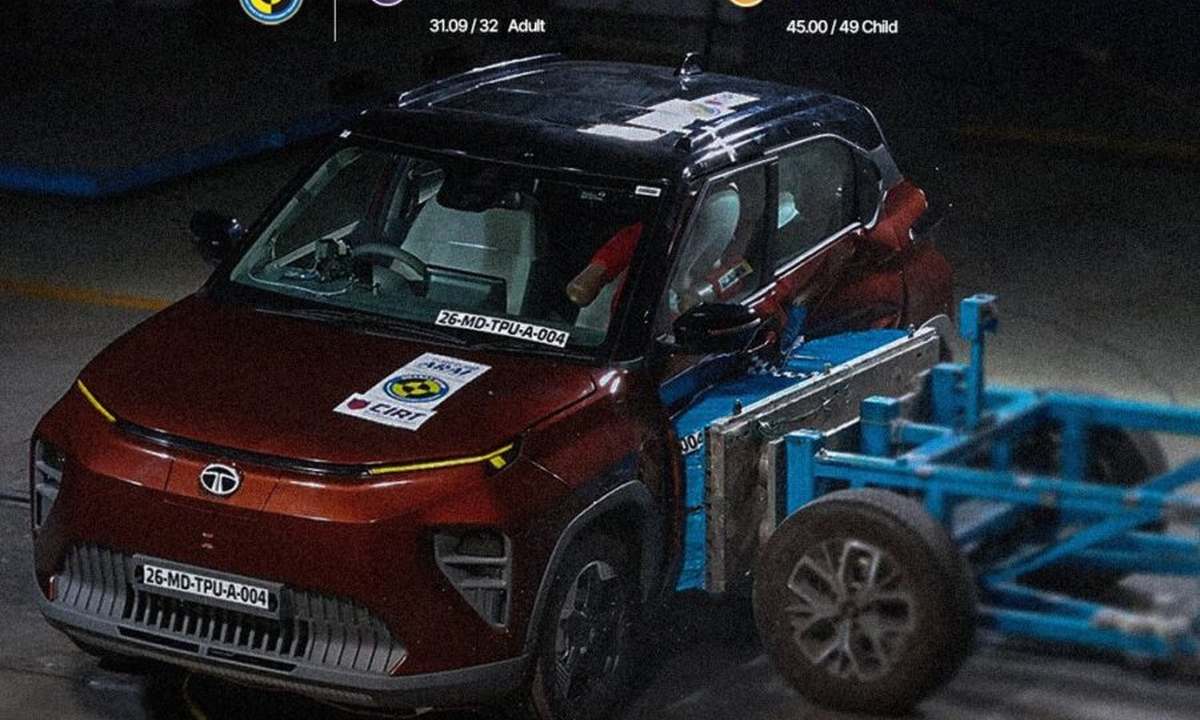
The Tata Punch EV Bharat NCAP crash test results are in, and Tata Motors has another trophy for its cabinet. The refreshed 2026 Punch EV micro-SUV has secured a full five-star rating in India’s homegrown safety assessment programme, with particularly impressive numbers in adult occupant protection. For a sub-₹10 lakh electric city car, this is genuinely significant—and frankly, it changes how you should think about this segment.
Tata Punch EV Bharat NCAP Scores Explained
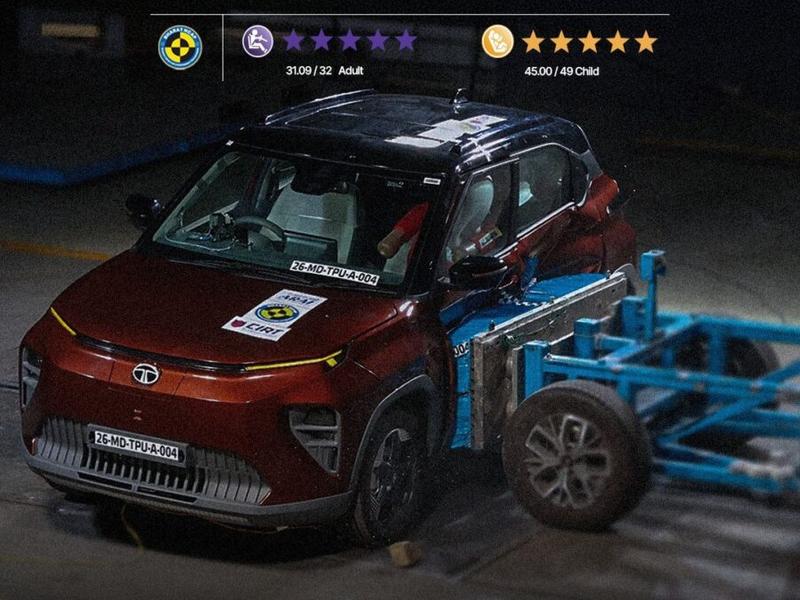
Let’s get the numbers straight. In adult occupant protection, the Punch EV scored 31.09 out of a possible 32 points. That’s not just a pass; it’s the kind of margin that tells you Tata’s engineers weren’t cutting corners. The child occupant protection tally came to 45 out of 49—a shade lower, but still solidly in five-star territory. The Tata Punch EV Bharat NCAP assessment was conducted in May 2026, testing the facelifted version that’s currently on sale.
For context, those adult occupant numbers are competitive with compact SUVs that cost ₹5-7 lakh more. The Creta and Seltos have historically scored well, but neither walked away with 31-plus in adult protection on their first attempt. This is the kind of result that makes insurance premiums look more attractive and resale values feel safer.
What This Means for Punch EV Buyers
If you’re shopping in the micro-EV space—and frankly, who isn’t these days, given fuel prices—the Tata Punch EV Bharat NCAP five-star result should weigh heavily. Safety used to be a checkbox at this price point. You’d get ABS, maybe a driver airbag, and call it a day. Now, Tata’s showing that even at ₹8-10 lakh on-road, you can have a car that’ll protect you in a serious accident.
The adult occupant protection score is what matters most if you’re the primary driver. The Punch EV tested showed strong performance in frontal impact protection and side-impact scenarios. The child occupant score—45/49—suggests the rear seat design and anchorage points are well-engineered, though there’s a marginal gap that could relate to seat geometry or belt routing.
This also matters for financing. Banks and insurance companies take Bharat NCAP ratings seriously. A five-star car often qualifies for better loan terms and lower premiums. Over a five-year ownership cycle, that compounds into real rupees saved.
How It Stacks Against Rivals
The Punch EV’s nearest rival is the Mahindra XUV400, which hasn’t yet submitted to Bharat NCAP testing (as of now). The Hyundai Kona Electric and MG Comet are in different price brackets. So for now, the Punch EV stands alone in its segment with a certified five-star badge—and that’s a marketing advantage Tata will milk hard in the coming months.
Among petrol micro-SUVs, the Maruti Ignis hasn’t been tested by Bharat NCAP either. The Tata Punch petrol sibling has never been formally assessed. So the EV version is actually the first in its class to go through the full rigour of India’s crash testing protocol and emerge with a top rating.
What Changed in the Facelifted Punch EV
The 2026 refresh brought more than just cosmetic tweaks. Tata appears to have strengthened the bodyshell structure and refined the airbag deployment logic. The test results suggest improvements in crumple zones and energy absorption—the kind of invisible engineering that doesn’t show up in spec sheets but absolutely shows up when a crash happens.
Battery placement in an EV is critical for safety. The Punch EV’s low-mounted battery pack (under the floor) lowers the centre of gravity and provides a protective barrier in side impacts. That’s partly why the adult occupant score is so high despite the car being relatively compact.
The Bottom Line
Here’s what matters: the Tata Punch EV Bharat NCAP certification isn’t just a badge. It’s evidence that Tata took safety seriously on a budget-friendly EV, and that’s rare. In a market where buyers are increasingly choosing electric cars for city commutes, having a five-star crash test result removes one major anxiety—will this car protect me if something goes wrong?
The 31.09/32 in adult protection is the real story. That’s not a participation trophy. That’s a result that says Tata’s engineers did their homework. If you’re cross-shopping the Punch EV against petrol alternatives in the Tier-2 town market, or if you’re a metro-based buyer worried about safety, this five-star rating just became your strongest argument for going electric.
The only caveat: Bharat NCAP tests at 64 km/h frontal and side impacts. Real-world crashes are messier and faster. But between a five-star car and an untested one, the choice is clear.
Frequently asked questions
What score did the Tata Punch EV Bharat NCAP test receive?
The 2026 Punch EV achieved a full 5-star rating with 31.09 out of 32 points in adult occupant protection and 45 out of 49 in child occupant protection. The test was conducted in May 2026.
How does the Punch EV’s safety rating compare to rivals?
The Punch EV is the first micro-EV in its segment to achieve a Bharat NCAP 5-star rating. Rivals like the Mahindra XUV400 and Hyundai Kona Electric haven’t yet been formally tested by Bharat NCAP.
Why is the Tata Punch EV Bharat NCAP result important for buyers?
A 5-star rating improves insurance premiums, loan terms, and resale value. It also confirms the car can protect occupants in serious accidents—a key consideration for budget-conscious EV buyers.