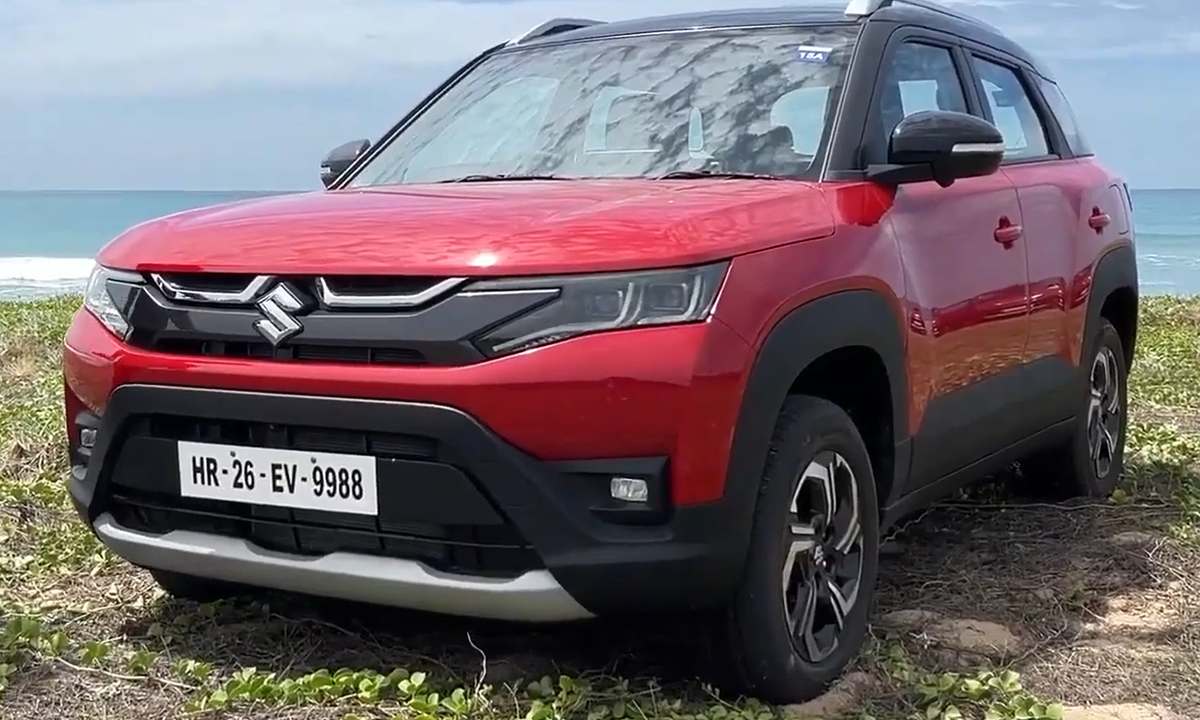
Maruti Suzuki’s entry into electric vehicles came late—the e-Vitara finally arrived after years of the company sitting on the sidelines while rivals racked up EV sales. But now it’s clear the delay wasn’t indecision. The company is gearing up for a serious electric offensive, with plans to introduce Maruti Suzuki electric SUVs across multiple segments, not just the single e-Vitara. This is a significant shift in strategy for India’s largest carmaker.
The e-Vitara was just the beginning
The e-Vitara marked Maruti’s formal arrival in the EV space, but internally, the company has been working on a much broader roadmap. Rather than treating the e-Vitara as a one-off experiment, Maruti sees it as the foundation for a diversified electric portfolio. The automaker wants a presence in nearly every segment it currently operates—from compact SUVs to midsize and larger models. This isn’t just about matching competitors; it’s about leveraging Maruti’s core strength: offering vehicles across price points and sizes.
What makes this push different from past Maruti announcements is the urgency. The company recognizes that the EV market, once dismissed as niche, is growing faster than anyone predicted. Waiting another five years could mean ceding market share to Tata, Mahindra, and newer entrants like BYD. The e-Vitara proved Maruti could build a competitive EV—now it’s about volume and variety.
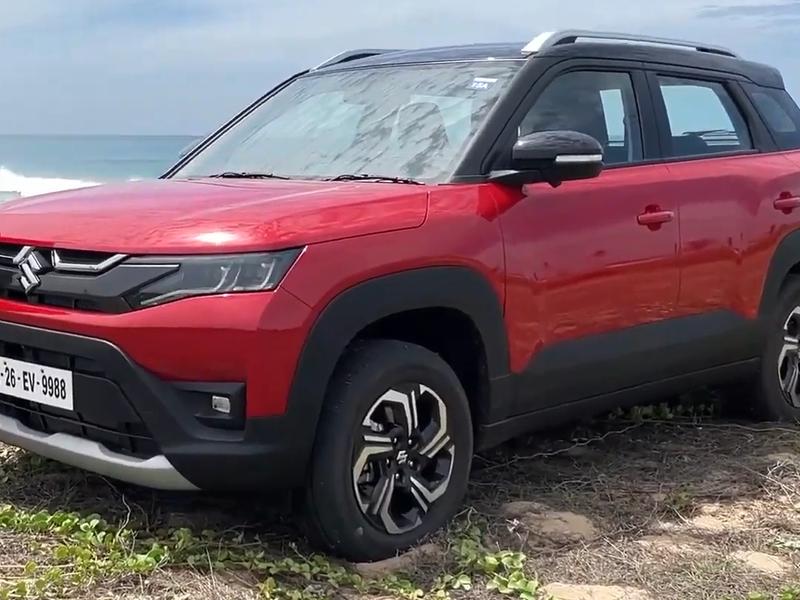
Maruti Suzuki electric SUVs: segment-by-segment plans
The company’s pipeline includes electric versions or purpose-built EVs in segments where Maruti already has strong conventional offerings. In the compact SUV space—where the Vitara Brezza dominates—an electric variant or successor is a natural fit. The Maruti Suzuki electric SUVs strategy extends upward too, with midsize SUV options being explored to compete with models like the Creta and Seltos when they eventually go electric.
What’s particularly interesting is that Maruti isn’t simply electrifying existing platforms. Some of the upcoming Maruti Suzuki electric SUVs will be purpose-built on dedicated EV architectures, likely developed in partnership with Suzuki or through in-house engineering. This approach allows for better packaging, lower costs, and optimized performance—lessons learned from the e-Vitara’s development.
The timeline remains fluid, but expect the first new model within the next 18-24 months. Maruti typically doesn’t announce vehicles too far in advance, so formal reveals will likely come closer to launch dates. However, the company’s commitment to the electric space is no longer in question.
Pricing and market positioning
Maruti’s competitive advantage has always been cost leadership. The Maruti Suzuki electric SUVs will follow this playbook—expect aggressive pricing relative to rivals. The e-Vitara already proved the company could deliver a credible EV without the premium pricing of some competitors. Future models should maintain that value positioning while expanding to capture buyers at different price points.
This strategy directly challenges Tata’s EV dominance in the mass market. Tata has built a strong EV reputation with the Nexon EV, Tigor EV, and Punch EV, but Maruti’s distribution network and brand trust among Indian buyers could shift the dynamics. If Maruti prices its compact electric SUV even ₹1.5-2 lakh below the Nexon EV, the uptake could be substantial.
Why this matters now
Several factors have converged to force Maruti’s hand. First, government incentives and charging infrastructure are finally becoming viable outside major metros. Second, battery costs have dropped enough to make EVs economically viable at Maruti’s target price points. Third, competitors’ early success has proven there’s real demand—it’s no longer theoretical.
But there’s also pressure from Suzuki’s global strategy. The parent company has committed to electrification worldwide, and India is too large a market to ignore. Maruti, as Suzuki’s primary Indian entity, must execute that vision locally.
The catch: manufacturing and supply chain
Expanding the Maruti Suzuki electric SUVs lineup requires significant investment in battery sourcing, EV-specific manufacturing lines, and dealer training. Maruti has already begun this work—the e-Vitara’s production setup is scalable—but scaling to multiple models simultaneously is a different challenge. Battery supply chains remain a constraint across the industry, and Maruti will compete with Tata, Mahindra, and others for cells.
Waiting periods for the e-Vitara have already stretched to several months in some regions, suggesting demand outpaces supply. Adding more models without solving the supply bottleneck could frustrate buyers. Maruti will need to announce battery partnerships or in-house sourcing plans to credibly support this expansion.
What about the conventional SUV portfolio?
Here’s where Maruti faces a balancing act. The Vitara Brezza, Ertiga, and other conventional SUVs remain massively profitable. Cannibalizing those sales with electric alternatives too aggressively would hurt short-term earnings. Expect Maruti to phase in Maruti Suzuki electric SUVs carefully—perhaps offering both conventional and EV options in the same segment for 3-4 years before eventually shifting the mix.
The bottom line
Maruti Suzuki’s electric SUV offensive is real, and it’s coming. The company has finally acknowledged that EVs aren’t a future scenario—they’re a present necessity. For Indian buyers, this means more EV choices at competitive prices, which is genuinely good news. For dealers and investors, it signals a major capital reallocation toward electric platforms. And for rivals like Tata and Mahindra, it means the cozy dominance of the EV space is about to end. The question isn’t whether Maruti will launch multiple Maruti Suzuki electric SUVs, but how quickly it can scale production without sacrificing the affordability that’s always been its calling card.
Frequently asked questions
When will Maruti launch its next electric SUV after the e-Vitara?
Maruti hasn’t confirmed exact timelines, but expect the first new model within 18-24 months. The company typically announces vehicles closer to launch, so formal reveals will likely come later in 2025 or early 2026.
Will Maruti Suzuki electric SUVs be cheaper than the Nexon EV and Punch EV?
Maruti’s strategy has always been competitive pricing. While exact prices are unknown, expect the company to undercut rivals—potentially by ₹1.5-2 lakh—while maintaining the value proposition that defines the brand.
Are the new Maruti Suzuki electric SUVs based on existing platforms or all-new designs?
A mix of both. Some will be purpose-built on dedicated EV platforms for better efficiency and cost, while others may leverage existing architectures adapted for electric drivetrains. The e-Vitara’s platform will likely underpin multiple future models.